

Introduction
The QSR industry is one of the most active sectors in commercial construction - and one of the most cost-sensitive. Whether you're a national franchisee developing a new pad site or an independent operator building out your first drive-thru concept, your ability to accurately forecast construction costs before you sign a lease or break ground is critical to the financial viability of the project.
The numbers can be staggering for first-timers. Building a fast food restaurant from the ground up typically costs between $1.3 million and $2.5 million for a standard 1,800 square foot establishment, including everything from design and sitework to kitchen equipment and drive-thru infrastructure. And those figures can climb significantly higher in high-cost coastal markets.
Meanwhile, the QSR market itself is booming. Analysts project that the global quick service restaurant market will grow from approximately $1,055 billion in 2025 to over $1,930 billion by 2032 — a compound annual growth rate of roughly 9 percent. Demand for new QSR locations, drive-thru upgrades, and next-generation digital kitchen formats is outpacing most other commercial construction categories.
This guide equips developers, franchisees, and operators with the benchmarks they need to budget accurately, negotiate confidently, and build smarter.
Key Takeaways
QSR build-out costs range from $100 to $800+ per square foot depending on concept, location, and build type.
The average QSR construction cost runs approximately $535 per square foot, with a typical 1,800 SF unit costing roughly $963,000 in hard construction costs alone.
RSMeans estimates the average QSR costs $1,100,000 to $1,400,000 to construct, with location as the primary variable.
Tenant improvements to an existing shell cost 30–50% less than ground-up new construction.
Drive-thru infrastructure alone can range from $20,000 for a basic single-lane setup to over $1 million for complex multi-lane systems with digital integration.
Urban coastal markets push QSR construction costs 20–30% above national averages.
QSR Construction Cost by Build Type
Not all QSR builds are created equal. The delivery method — ground-up freestanding, second-generation conversion, or inline tenant build-out — is the single biggest variable in your total project budget.
Ground-Up Freestanding QSR
This is the highest-cost scenario: a brand-new building on a raw pad site, built to a specific brand's prototype specifications. The average construction cost for fast food restaurants ranges from $535 to $555 per square foot based on 2025 industry benchmarks, with higher-end urban locations reaching up to $850 per square foot.
For a standard 1,800 SF freestanding QSR with a single drive-thru lane, total all-in costs typically land between $1.3 million and $2.5 million, including:
Hard construction costs: $963,000–$1,170,000
Land acquisition or lease preparation: $150,000–$450,000
Kitchen equipment: $50,000–$100,000
Drive-thru infrastructure: $50,000–$150,000
Soft costs (permits, design, legal, contingency): $120,000–$200,000
Second-Generation Conversion (Former QSR)
Converting a former QSR building into a new concept is typically the most economical path. Because existing infrastructure — grease traps, hood penetrations, utility services, drive-thru lanes — is already in place, construction costs are substantially lower. Building out an existing space costs 30% to 50% less than new construction, particularly when basic infrastructure like utilities and structural elements are already in place.
Estimated cost range for a second-gen conversion: $300,000–$900,000
The key caveats: older buildings may require significant upgrades to meet current health, fire, and ADA codes, and brand standards compliance for franchised concepts can push costs toward the higher end of the range.
Inline / End-Cap Tenant Build-Out
End-cap locations within strip centers or retail power centers are increasingly popular for QSR operators seeking lower land costs and built-in co-tenancy traffic. End-cap locations incorporated into existing spaces cost between $445,950 and $846,000, depending on size and drive-thru configuration.
Inline build-outs from a vanilla shell typically run $150–$400 per square foot for a QSR, with the lower end reflecting simpler counter-service concepts and the upper end reflecting full commercial kitchen build-outs with drive-thru add-ons.
QSR Construction Cost Per Square Foot: Full Range
Restaurant build-out costs run anywhere from $100 to $800 per square foot, with most projects falling between $150 and $750 per square foot. This wide range is driven primarily by concept type, finish level, and geography.
Drive-Thru Construction Costs: A Major Line Item
The drive-thru is now the dominant revenue channel for most QSR brands — and it's one of the most expensive components of any new build or remodel. Adding a drive-thru lane alone can rise to $200,000, and multi-lane digital systems can cost far more.
Drive-Thru Cost Breakdown
Single lane — basic setup $20,000–$200,000
Multi-lane drive-thru system $200,000–$1,000,000+
Lane construction and paving $20,000–$200,000
Digital menu board system $1,000–$20,000 per board
Static menu boards $3,000–$8,000 per board
Order window and intercom systems $5,000–$15,000
Drive-thru canopy / awning $15,000–$50,000
Source: BusinessDojo QSR Construction Cost Guide
The Drive-Thru Evolution
The industry has fundamentally shifted its footprint around drive-thru performance. 60% of new Chipotle locations will include a drive-thru lane, with some "Digital Kitchen" formats offering only pickup and delivery. Shake Shack, traditionally dine-in only, has launched its first drive-thru locations featuring three dedicated lanes. Taco Bell and McDonald's have introduced next-generation prototypes with smaller dining rooms and expanded multi-lane drive-thru configurations.
For developers and franchisees, the implication is clear: drive-thru infrastructure is no longer a feature — it's the core operational asset of the build.
Commercial Kitchen Construction Costs
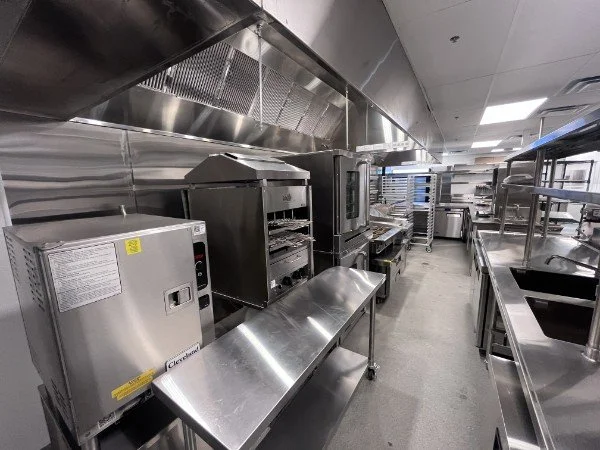
The back of house is where QSR construction budgets get complicated. Commercial kitchens require specialized MEP systems, fire-suppression infrastructure, code-compliant ventilation, and heavy-duty plumbing that go far beyond standard commercial office or retail build-out costs.
MEP Systems for QSR Kitchens
MEP installations for fast food restaurants typically cost $30 to $60 per square foot, representing a significant portion of the total construction budget. Key components include:
HVAC: $15,000–$50,000 depending on restaurant size and efficiency requirements. QSRs require robust ventilation to handle high-BTU cooking equipment and maintain comfortable conditions for staff and dining guests.
Electrical: $15–$25 per square foot. Modern QSRs require high-capacity electrical systems to support commercial cooking equipment, digital menu boards, POS systems, and drive-thru technology.
Plumbing: $10–$20 per square foot, including commercial-grade fixtures, floor drains, and specialized connections for dishwashers and ice machines.
Hood and Ventilation Systems
The commercial kitchen exhaust hood is one of the most regulated — and most expensive — components of any QSR build. A commercial kitchen hood installation typically costs $5,000 to $20,000, with larger or more complex systems running $950 to $1,200 or more per linear foot. A standard 10-foot hood can run $10,000–$12,000 in installation costs alone — before factoring in ductwork, makeup air units, and fire suppression.
All Type I hoods — required for fryers, grills, and griddles that produce grease-laden vapors — must comply with NFPA 96 standards and include an integrated fire suppression system, adding another $2,000–$5,000 to the installation cost.
Grease Trap
Grease trap installation ranges from $750 for small under-sink units to over $10,000 for large in-ground interceptor systems, including labor and permits. Required by health departments in virtually all municipalities, proper sizing is critical — undersized traps lead to health code violations, fines, and expensive emergency service calls.
Commercial Kitchen Equipment
Commercial kitchen costs range from $15,000 to $250,000 or more depending on the establishment's size and concept. For a standard QSR, budget $50,000–$100,000 for core equipment:
Commercial fryer (per unit) $2,000–$15,000
Commercial griddle / flat-top $2,000–$10,000
Commercial oven / conveyor oven $5,000–$20,000
Walk-in cooler $5,000–$15,000
Walk-in freezer $6,000–$20,000
Prep tables / refrigerated units $1,500–$8,000 each
Ice machine $2,000–$10,000
Commercial dishwasher $3,000–$20,000
POS / Digital ordering systems $5,000–$20,000+
Regional Cost Variations Across the USA
Geography is one of the most powerful cost drivers in QSR construction. Labor rates, building codes, weather patterns, and material logistics can all cause significant regional swings — contractors and developers should adjust budgets by 10–20% depending on local conditions.
Northeast (New York, Boston, Philadelphia)
QSR build-out range: $400–$800+ per square foot
Union labor requirements, dense urban logistics, and complex permitting add substantial overhead
Commercial construction in New York can reach $1,270 per square foot for premium product — QSRs in high-foot-traffic Manhattan locations reflect these dynamics
West Coast (Los Angeles, San Francisco, Seattle)
QSR build-out range: $375–$700 per square foot
California's Title 24 energy codes, seismic requirements, and high labor costs add 15–25% above national averages
Portland's industrial construction market ranked among the most expensive in the U.S. during 2024
Mountain West / Southwest (Denver, Phoenix, Dallas-Fort Worth)
QSR build-out range: $250–$450 per square foot
Texas markets benefit from faster permitting, no state income tax, and more competitive subcontractor pricing — making design-build delivery increasingly attractive for national QSR rollouts
Denver and Phoenix are seeing increasing labor competition as population growth drives construction volume
Southeast (Atlanta, Charlotte, Nashville, Tampa)
QSR build-out range: $200–$375 per square foot
One of the strongest QSR growth markets in the country, with significant new franchise development activity
Midwest (Chicago, Columbus, Indianapolis, Kansas City)
QSR build-out range: $200–$400 per square foot
Chicago is a notable exception with strong union labor requirements that push costs toward Northeast levels in the urban core
Secondary Midwest markets remain among the most cost-efficient environments for QSR new builds
Total Cost by QSR Format
Freestanding Single Drive-Thru (1,500–2,000 SF)
The classic QSR prototype — purpose-built on a pad site with a single drive-thru lane, limited dining room, and full commercial kitchen.
Estimated All-In Cost: $1.0M – $2.5M
Hard Construction $963K–$1.2M
Land / Site Prep $150K–$450K
Kitchen Equipment $50K–$100K
Drive-Thru Infrastructure $50K–$200K
Soft Costs (Design, Permits, Legal) $100K–$200K
Contingency (10%) $75K–$150K
Multi-Lane Drive-Thru / Next-Gen Format (1,800–2,500 SF)
Emerging prototype formats — popularized by Taco Bell, Chipotle, and McDonald's — feature two to four drive-thru lanes, minimal or no dine-in space, and advanced digital ordering infrastructure.
Estimated All-In Cost: $1.5M – $3.5M+
The premium over standard builds comes from multiple lane configurations, expanded paving and stacking capacity, sophisticated digital menu board systems, and often a higher-quality building envelope to reflect the brand investment.
Fast-Casual / Premium QSR (2,000–3,500 SF)
Concepts like Shake Shack, Sweetgreen, and premium burger brands blur the line between QSR and fast-casual. Elevated interior finishes, custom millwork, and higher-end materials push costs well above standard QSR benchmarks.
Estimated All-In Cost: $1.5M – $4.0M+
Fine dining and premium casual restaurants with custom millwork and premium finishes push costs to $300–$1,000 per square foot. Premium QSR concepts occupy the upper portion of the fast-casual range.
Franchise-Specific Cost Benchmarks
Brand standards compliance is a significant cost driver for franchised QSR concepts. Corporate development teams invest substantial resources defining exact specifications for seating, kitchen layouts, drive-thru configurations, drive-thru lane dimensions, ordering point spacing, and signage. Some brands develop specifications down to the length, radius, and width of drive-thru lanes and distances between order and pick-up points.
Building outside of these brand standards risks losing operational efficiency certifications and franchise agreement compliance — making budget flexibility more limited than in independent builds.
For franchisees specifically: total investment costs for freestanding QSR locations from established national brands range between $893,870 and $1,348,500 at the new construction level, with end-cap conversions typically running $445,950–$846,000.
Hidden Costs That Blow QSR Build Budgets
1. Site Work and Utility Connections
On raw land, connecting utilities is a significant and often underestimated cost. Utility connections to raw land can cost $9,000 to $34,500 depending on distance from existing services. Site grading, detention ponds, accessible parking, and paving add $100,000–$500,000 or more to ground-up projects.
2. Grease Trap Sizing and Compliance
Health departments in most municipalities require commercial grease interceptors sized to kitchen throughput. Undersized units create compliance issues; oversized units drive unnecessary cost. Budget $5,000–$20,000 for grease trap installation and plumbing rough-in, and verify sizing requirements with your local authority before permit submission.
3. Fire Suppression in the Kitchen
NFPA 96 requires all Type I kitchen hoods to include an approved automatic fire suppression system. Suppression system installation adds $2,000–$5,000 per hood run. For a QSR with multiple cooking stations, this cost compounds quickly — and the fire marshal has final sign-off authority regardless of budget.
4. ADA Compliance
All QSR facilities must meet ADA Standards for Accessible Design — including accessible parking, restroom design, counter heights, queue lane clearances, and drive-thru window accessibility. Retrofitting for ADA compliance mid-build is far more expensive than designing for it from day one. Budget $15,000–$50,000 for ADA-related design and construction requirements.
5. Permitting and Inspections
QSR construction in food service occupancies triggers multiple parallel permitting tracks: building, health department, fire marshal, and in many cases, signage and drive-thru lane DOT approvals. Depending on the program, PMs may need to procure Construction Fence Permits, DOT permits, Transit Authority approvals, site safety plans, and finalized site surveys. Budget $15,000–$50,000+ for architectural drawings, engineering reports, permitting, and approvals, particularly in urban markets.
6. Pre-Opening Operating Costs
Pre-opening expenses include months of rent, utilities, and labor costs before revenue generation begins. Utilities for a 4,000–4,500 SF QSR typically run $1,000–$1,200 per month during construction and setup. Marketing budgets often allocate around 6% of anticipated first-year sales toward launch promotion.
7. Labor Cost Escalation
Costs have increased between 40 and 60 percent since 2020 across food service construction. Skilled trade labor shortages — particularly electricians, plumbers, and commercial kitchen ventilation specialists — continue to push wages above general inflation in virtually every U.S. metro. Budget a 10–15% contingency on all QSR builds in 2025.
How to Control QSR Construction Costs
1. Pursue Second-Generation Spaces First
The most consistent way to reduce QSR build costs is to start from a former restaurant or QSR shell. Existing grease trap infrastructure, kitchen penetrations, utility service sizing, and drive-thru configurations can cut total project costs by 30–50% compared to ground-up builds.
2. Standardize Brand Prototype Designs
Using uniform layouts, ceiling systems, and wall paneling across stores allows bulk ordering and improved contractor familiarity, reducing labor cost and variation risk. For franchisees opening multiple units, working with a general contractor experienced in your brand's prototype provides the most predictable cost and schedule outcomes.
3. Negotiate a Strong Tenant Improvement Allowance
In competitive lease markets, landlords — particularly those with medical, retail, or prior food-service vacancies — are motivated to offer meaningful TI packages. In competitive corridors, TI allowances can reach $50–$70 per square foot. Tie larger allowances to longer lease terms and use your contractor's cost estimate as a negotiating tool.
4. Use Design-Build Delivery
Design-build compresses preconstruction, locks pricing earlier, and reduces the gap between budget and final bid cost. For QSR concepts executing multi-unit rollouts, design-build with a contractor experienced in food service construction is consistently the most efficient delivery method.
5. Procure Kitchen Equipment Early
Long-lead commercial equipment — walk-in coolers, commercial fryers, conveyor ovens, and digital drive-thru systems — should be specified and ordered during the preconstruction / design phase, not after framing. Equipment dimensions, utility connection requirements, and floor drain placements must be coordinated with your MEP engineer before the permit set is finalized.
6. Value-Engineer Before You Break Ground
Design-phase value engineering changes cost 90% less than mid-construction ones. Identify opportunities to simplify dining room millwork, standardize fixture packages, use modular or prefabricated kitchen components, and phase drive-thru upgrades for future capital improvements rather than opening day.
Financing Your QSR Build
QSR construction projects are commonly financed through:
SBA 7(a) Loans — flexible financing up to $5 million for small business restaurant construction, with competitive rates and extended repayment terms. Learn more at SBA.gov
SBA 504 Loans — structured for long-term fixed-asset investment, ideal for land acquisition + construction combinations
Franchise Financing Programs — many national QSR brands have preferred lender relationships that streamline the financing process for franchisees
Commercial Equipment Financing — vendors like Restaurant Equipment World and WebstaurantStore offer leasing and financing for major kitchen equipment packages
Sale-Leaseback Structures — common among multi-unit QSR operators to free up capital while maintaining operational control of the site
Regulatory and Code Compliance
QSR construction is among the most heavily regulated categories in commercial construction. Key compliance areas include:
NFPA 96 — Standard for ventilation control and fire protection of commercial cooking operations. Governs all exhaust hood and fire suppression design requirements.
ADA Standards for Accessible Design — All QSR facilities must comply with federal accessibility requirements for parking, restrooms, queuing areas, and drive-thru windows.
Local Health Department Regulations — grease trap sizing, food prep surface requirements, handwashing station placement, and refrigeration standards vary by municipality and require pre-approval before permit submission.
International Mechanical Code (IMC) — governs ventilation requirements by equipment type and cooking volume.
DOT / Site Plan Approvals — drive-thru lane configurations, curb cuts, stacking distance, and traffic flow must typically receive approval from the local department of transportation, adding time and cost to the permit process.
Key Resources and Industry References
National Restaurant Association — industry data, advocacy, and business resources for QSR operators
QSR Magazine — editorial coverage of QSR trends, construction, and franchise development
Gordian RSMeans Data — localized construction cost benchmarks including fast food restaurant models
EB3 Construction — Restaurant Build-Out Guide — detailed cost breakdown for restaurant tenant improvements
KRG Hospitality — QSR and food service startup cost analysis
Aaron Allen & Associates — restaurant industry financial benchmarking
APX Construction Group — QSR and restaurant construction guides with cost breakdowns
Sevan Multi-Site Solutions — program management for national QSR remodels and new builds
NFPA 96 — official ventilation and fire protection standard for commercial kitchens
ADA.gov — federal accessibility standards for all commercial construction
SBA.gov — Small Business Administration loan programs for restaurant construction
Toast — QSR Industry Statistics — QSR operational data and industry benchmarks
Beaufurn Interior Build-Out Guide — regional commercial construction cost benchmarks for 2025
WebstaurantStore — commercial kitchen equipment pricing and specifications
Conclusion
Building a QSR in the USA in 2026 means navigating a construction market that is more expensive, more complex, and more drive-thru-centric than at any point in the industry's history. Costs have increased 40–60% since 2020, and operators who underestimate capital requirements are among the most common casualties in food service entrepreneurship.
The most important variable in your budget is the build type: a second-generation conversion from a former QSR can cost half as much as ground-up construction on a raw pad site. The second most important variable is geography: a Southeast or Mountain West build can run 30–40% less than an equivalent project in a coastal metro.
For most standard freestanding QSR concepts in a mid-range U.S. market, budget between $1.0 million and $2.0 million all-in for a 1,500–2,000 SF unit with a single drive-thru lane. Multi-lane next-gen formats, premium fast-casual concepts, and urban infill projects should budget significantly higher — and always carry a 10–15% contingency.
Work with a general contractor who has demonstrable QSR and food service experience, engage your MEP engineers early, and never let equipment procurement lag behind your permit timeline. The QSR operators who build on budget are the ones who plan with precision long before they break ground.
Building a QSR in 2026? Schedule time with us now!
Last updated: March 2026. Cost data is directional and based on publicly available industry benchmarks. Actual costs will vary by project scope, location, contractor, brand standards requirements, and market conditions. Consult a qualified contractor, architect, and financial advisor for project-specific estimates.
Fogo de Chão, Phoenix, AZ
TCG provided construction management for a full-service Fogo de Chão Brazilian steakhouse in Phoenix, Arizona, coordinating the open churrasco grill line, bar, dining room, and commercial kitchen through opening.
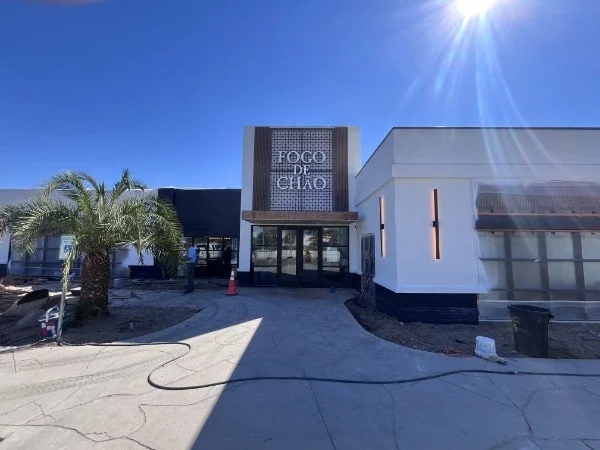
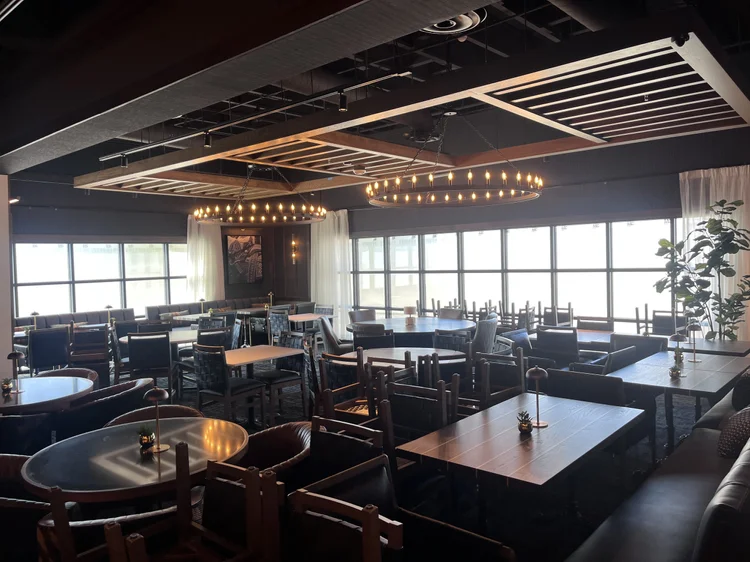
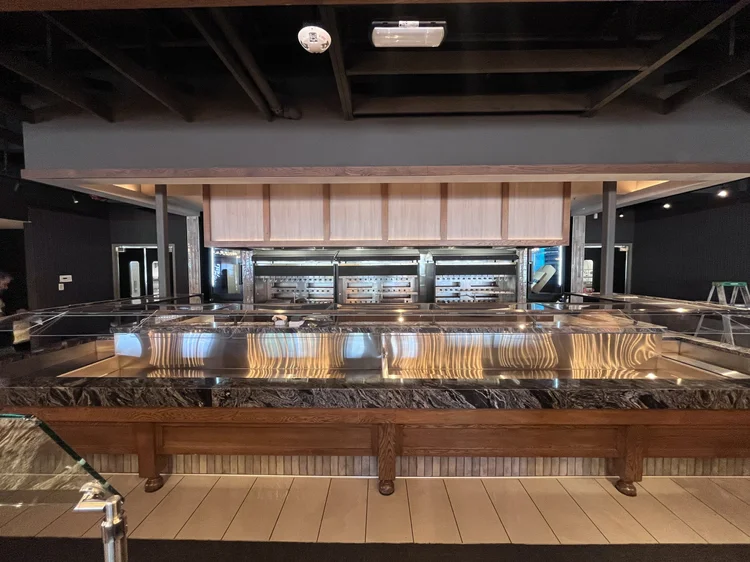
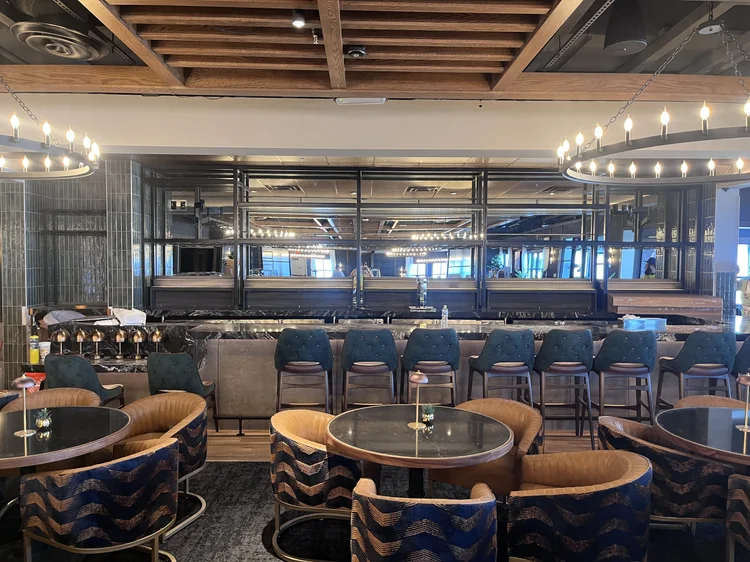
High-end restaurant work is schedule and detail driven: hoods, make-up air, gas, grease systems, and finish quality all have to land on the same opening date. TCG ran the trades, the schedule, and owner reporting to a national fine-dining brand standard.
Full-service or QSR, the critical path is the same: kitchen exhaust, utilities, and a fixed opening date drive the schedule whether the concept is a steakhouse or a drive-thru. TCG brings the same construction management discipline to QSR and fast-casual builds; see TCG’s restaurant and QSR construction services.
- Kitchen: open churrasco grill line with Type I hood and make-up air per NFPA 96
- Front of house: full bar and main dining room
- Back of house: commercial kitchen and support spaces
- Exterior: facade and entry to brand standard
See all recent work on the TCG projects page.
Frequently Asked Questions: QSR Restaurant Construction Costs
How much does it cost to build a QSR restaurant from the ground up in 2026?
A ground-up QSR restaurant costs $535 to $850+ per square foot for hard construction, with total all-in project budgets ranging from $1.3 million to $2.5 million for a typical 1,800-square-foot freestanding building with drive-thru. Costs vary significantly by format, brand prototype requirements, and regional labor market. Use TCG's AI construction estimator for project-specific pricing.
What is the biggest cost driver in QSR construction?
Kitchen infrastructure is the single largest cost driver, representing 30–40% of total construction budget. Commercial-grade ventilation, hood systems, grease interceptors, fire suppression, walk-in coolers, and specialized cooking equipment create MEP complexity that far exceeds standard commercial construction. Operators who have not finalized their food program before design begins frequently encounter expensive change orders mid-construction.
How much does a drive-thru add to QSR construction cost?
A drive-thru adds $75,000 to $200,000 to total project cost depending on configuration and market. Single-lane configurations are significantly cheaper than dual-lane with pre-order speaker, confirmation screen, and merge point. The cost is primarily in site work — concrete lanes, curbing, canopy, signage, and electrical — not in the building itself.
How long does it take to build a QSR restaurant?
A ground-up QSR restaurant typically takes 5 to 9 months from permit issuance to certificate of occupancy. Freestanding drive-thru builds on prepared outparcels can be completed in 5–6 months. Complex builds with full site development in high-regulation markets take 7–9+ months. Permitting alone can add 2–6 months in jurisdictions with extended design review or environmental review processes.
What is the difference between franchise and independent QSR construction costs?
Franchise QSR builds typically cost 10–20% more per square foot than independent operator builds because franchise operators must comply with brand prototype specifications that limit value engineering flexibility on finishes, equipment, and exterior materials. Independent operators have more control over material selection and can make cost-driven substitutions without brand approval.
How do QSR construction costs vary by region?
The Southeast (Houston, Atlanta, Charlotte) offers the lowest QSR construction costs, running 10–20% below national average. The Midwest tracks near national average except for union markets like Chicago. The Mountain West (Denver) runs 10–20% above average. The Northeast runs 30–50% above. California and the West Coast represent the highest-cost environment at 20–40% above national average.
Should I use design-build delivery for a QSR project?
Design-build delivery creates the most value on QSR projects because it allows the GC to provide real-time cost feedback during design, preventing the budget overruns that occur when architects design without construction pricing input. Owners who engage a GC at schematic design consistently recover 8–15% of hard costs through early value engineering.
How do I get a QSR construction cost estimate?
TCG's AI-powered construction estimator provides preliminary QSR cost estimates in under two minutes. For formal preconstruction budgeting, schedule a 30-minute call with TCG's team.
