

The 5 Hottest Metro Areas for Commercial Development in 2026
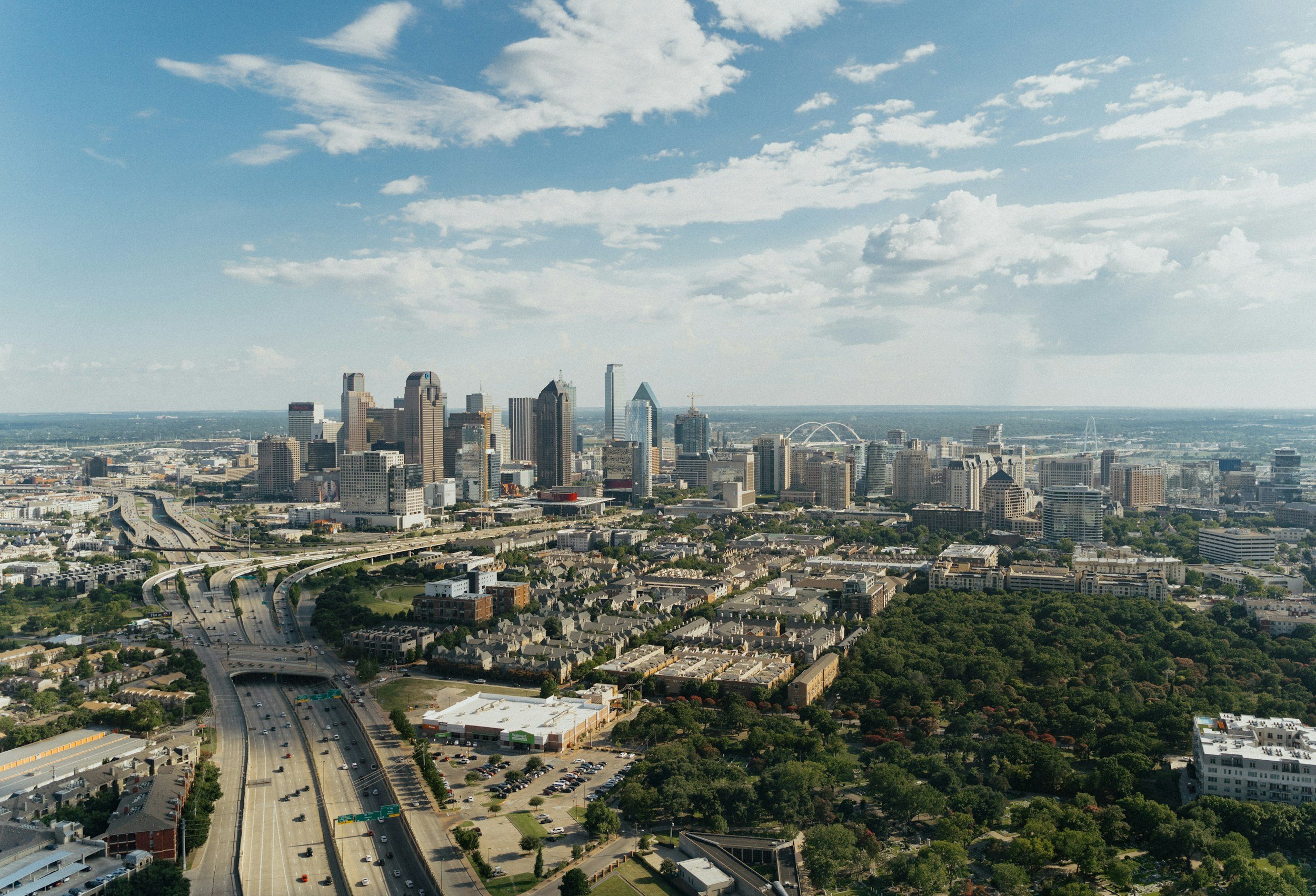
Where capital is flowing, cranes are rising, and commercial construction pipelines show no signs of slowing — here are the five markets every developer, investor, and contractor needs to watch right now.
The commercial construction landscape in 2026 is defined by selectivity. After years of post-pandemic correction, investors and developers are zeroing in on a handful of high-conviction markets where population growth, corporate migration, and infrastructure investment converge. This guide draws on current data from CBRE, Dodge Data & Analytics, J.P. Morgan, and the Urban Land Institute to identify where the most active commercial development pipelines are concentrated heading into 2026.
1. Dallas-Fort Worth, Texas
The Undisputed #1 for the Fifth Consecutive Year
Dallas-Fort Worth has ranked as the most attractive commercial real estate market for U.S. investors for the fifth straight year, according to CBRE's 2026 Investor Intentions Survey. The Metroplex leads the nation in industrial pipeline size, industrial sales volume, data center construction starts, and retail square footage under construction.
Key Stats
· 34 million SF of industrial space under construction — the largest active pipeline in the U.S., per CommercialCafe/Yardi Matrix
· $5.6 billion in industrial sales year-to-date through late 2025, leading all U.S. markets by a wide margin
· 3.2 million SF of data center construction starts in 2025, second only to Northern Virginia, per CommercialCafe's February 2026 Industrial Report
· 7.2 million SF of retail under construction, led by Collin and Denton Counties
· Employment growth of 12.5% since 2020, per the Federal Reserve Bank of Dallas
Why It Matters for Commercial Contractors
DFW's deep subcontractor network, absence of restrictive zoning within Dallas city limits, and business-friendly tax structure continue to attract national brands and corporate relocations at a pace no other market can match. Speculative warehouse and distribution development remains active around the I-20 and I-35 corridors and at Hillwood's AllianceTexas in North Fort Worth. For design-build contractors with industrial, data center, or retail expertise, DFW represents the most reliable source of large-scale project volume in the country.
2. Atlanta, Georgia
The Southeast's Construction Engine
Atlanta enters 2026 as the Southeast's most diversified commercial construction market. Engineering News-Record projects total construction starts to reach $24.3 billion in 2026 — a 5% increase from 2025 — with commercial and manufacturing starts rising ~4% and institutional work up 8%, based on Dodge Data & Analytics forecasts.
Key Stats
· 2.8 million SF of data center construction starts in 2025, making Atlanta a top-five data center market nationally
· In-place industrial rent growth of 8% over the last 12 months — highest of any major U.S. market, per CommercialCafe's February 2026 National Industrial Report
· Active developments include the $1.3B DC BLOX Atlanta West Hyperscale Data Center Campus and Trammell Crow's 686,400 SF Buford Creek Business Center
· EV battery plants, aerospace projects, and advanced manufacturing operations continue to relocate, driven by Georgia's aggressive tax incentive programs
· The Atlanta BeltLine and Midtown tech corridors are driving mixed-use and transit-oriented development — covered in depth by Commercial Property Executive
Why It Matters for Commercial Contractors
Atlanta offers something rare: high-volume industrial activity alongside a surging data center and advanced manufacturing pipeline. Georgia's film and production tax credits add yet another development vector — each major studio facility spurs demand for supporting retail, hospitality, and infrastructure. Atlanta's diversity of project types creates resilience against sector-specific downturns.
3. Phoenix, Arizona
The Semiconductor and Logistics Capital of the Southwest
Phoenix has transformed from a Sun Belt growth story into a genuine industrial and technology manufacturing powerhouse. The CHIPS and Science Act has directed billions in semiconductor fabrication investment to the metro — a shift documented by the Urban Land Institute in its Emerging Trends in Real Estate 2026 report.
Key Stats
· 19.3 million SF of industrial space in the development pipeline, second only to DFW nationally, per Commercial Property Executive
· 2.9 million SF of data center construction starts in 2025 — third highest nationally
· Phoenix led North America in data center absorption in 2024, surpassing even Northern Virginia, per Cushman & Wakefield
· Maricopa County leads the nation in new commercial square footage permitted
· Multiple chip fabrication facilities under construction or expansion — creating a multi-year advanced manufacturing boom
Why It Matters for Commercial Contractors
Phoenix's semiconductor and logistics boom is creating a sustained multi-year construction pipeline. The I-10 corridor connecting Phoenix to Southern California and Texas has become one of the most active logistics development zones in the country. Contractors with experience in mission-critical, industrial, or large-format commercial construction will find strong demand well into 2027 and beyond.
4. Nashville, Tennessee
Steady, Diverse, and Still Accelerating
Nashville's combination of population growth, economic diversity, and anchor project investment keeps it firmly in the top tier. Per the PwC/ULI Emerging Trends in Real Estate 2026 report, Nashville remains a top-5 real estate market driven by 1.5-2% annual population growth and a diversified economy.
Key Stats
· Nashville industrial lease spreads rank seventh nationally at $2.25/SF, per CommercialCafe's February 2026 Industrial Report
· Industrial vacancy of 7.7% — among the tightest conditions of any major metro
· Oracle's $1.2 billion campus (8,500 jobs) and a $2.1 billion enclosed NFL stadium are driving significant supporting commercial development
· Hospitality, entertainment, and convention center construction remain highly active as the market matures
Why It Matters for Commercial Contractors
Nashville's development pipeline is broad-based across hospitality, industrial, mixed-use, and infrastructure — making it one of the most reliable markets for sustained backlog. The Oracle campus and NFL stadium represent billions in direct and indirect construction activity, with supporting commercial ecosystems driving work well into the next decade.
5. Miami, Florida
The International Capital of U.S. Commercial Real Estate
Miami's commercial real estate market has undergone a structural transformation over the last five years. Per MetLife Investment Management's 2026 CRE Outlook, Miami now ranks among the top-performing U.S. metros, bolstered by strong population growth, job creation, and a diversified economy attracting domestic and international capital alike.
Key Stats
· Miami industrial lease spreads rank fourth nationally at $3.25/SF, per CommercialCafe's February 2026 National Industrial Report
· In-place industrial rent growth of 7.4% over the past 12 months, tied for second nationally with Tampa
· Miami leads all U.S. markets in coworking space as a percentage of office inventory at 4.4%, per Commercial Property Executive
· Financial services, technology, professional services, healthcare, and life sciences firms all have growing commercial footprints in the metro
· Strong international capital inflows continue to drive mixed-use, office, and luxury commercial development across Miami-Dade
Why It Matters for Commercial Contractors
Miami's transformation into a true gateway business market has created sustained commercial construction demand beyond its traditional hospitality and residential sectors. The combination of domestic corporate migration and deep international investment capital makes Miami unusually resilient across market cycles. Industrial development along major logistics corridors is increasingly active, while Class A mixed-use and office projects in Brickell, Wynwood, and the urban core continue to attract top-tier contractors.
Honorable Mentions: Markets Worth Watching
Beyond the top five, several secondary and emerging markets are generating significant commercial construction activity heading into 2026:
· Houston, TX — Leads the U.S. in commercial construction spending; manufacturing, petrochemical, and warehouse megaprojects are primary drivers, per the Dallas Fed Southwest Economy report
· Charlotte, NC — New entrant to CBRE's top 10 most attractive U.S. markets; strong millennial workforce and high-skilled job growth fueling mixed-use and office development
· Tampa-St. Petersburg, FL — Major urban redevelopment, strong industrial demand, and logistics construction driven by a mid-sized port
· Salt Lake City, UT — Top-10 data center market nationally; low energy costs, minimal disaster risk, and a fast-growing tech sector
· Columbus, OH — Intel's semiconductor fab campus is creating a construction wave comparable to Phoenix
What This Means for Developers and Owners Planning Commercial Projects
The throughline across all five of these markets is simple: population growth, corporate investment, and infrastructure spending are concentrating in business-friendly markets with accessible labor. As J.P. Morgan's 2026 CRE Trends report notes, the 2026 market is strong from both a capital and fundamental standpoint, with more transactions anticipated as debt costs stabilize.
For developers and owners evaluating where to deploy capital, the risk-adjusted case for these five metros is compelling. For general contractors and construction managers, they represent the highest-probability environments for sustained project volume, competitive subcontractor markets, and efficient permitting timelines.
About Terrapin Construction Group
Terrapin Construction Group is a national design-build contractor operating across 38 states, with deep expertise in commercial, industrial, and specialty construction. TCG partners with developers, institutional owners, and corporate operators on complex projects where schedule, budget certainty, and single-source accountability matter most.
To discuss an upcoming project, schedule time with us now!
