

Your Construction Partner. Free Estimates • PCA Support • Value Engineering • Referral Program • All 50 States
Free preliminary estimates. Property condition assessments. Point cloud building scans. Value engineering. A generous referral incentive program. Terrapin Construction Group works with commercial real estate brokers nationwide as the construction resource your clients need to make decisions, close deals, and execute scope, without you ever losing control of the relationship.
What a TCG Broker Partnership Actually Gets You
TCG gives commercial real estate brokers free construction inputs on active deals: instant cost estimates, a preliminary budget within 5 business days, building condition memos in 5 to 10 business days, and value engineering that typically recovers 8 to 15 percent of hard costs. Point cloud building scans are available at preferred partner rates through Reality Capture Atlanta. Every partnership carries a written no-conflict commitment and a documented referral incentive on closed projects. Licensed in all 50 states.
Zero. Estimating, condition memos, and value engineering are free on active broker-introduced deals. Scanning is a paid third-party engagement at partner rates.
Instant via the AI estimator. 5 business days for a hard-priced preliminary budget. 5 to 10 business days for a condition memo or VE study.
Written no-conflict term in every partnership agreement. TCG does not approach your client for new business without your introduction or written consent.
Documented in a written referral agreement, tied to billing milestones on the closed project. Rates discussed on the intro call. See the referral program page.
Licensed and active in all 50 states across 14 commercial verticals. Headquartered in Denver, CO.
Before the LOI. Construction cost is the variable most likely to change your client's decision, and it is far cheaper to find a problem during site selection than during design.
What TCG Does For Your Deals
Brokers need construction input at exactly three moments in a deal: when a client needs a number, when a building's condition needs validating, and when the project does not pencil and someone has to find the cost out. Those are the three jobs TCG is built to do for broker partners, alongside CCIM-credentialed investment sales professionals, SIOR tenant reps, and NAIOP-affiliated developers nationwide.
Every service below is delivered at no cost to the broker on active deals. We earn the partnership through reliability and referral, not by billing you for the work that keeps your deals moving. If you already have a contractor's bid in hand and want a second set of eyes, the free bid review covers that too.
Free Construction Estimates
Your client asks "what would it cost to build this?" You can have an answer in two minutes, not two weeks.
The TCG.ai construction estimator generates instant, market-calibrated cost benchmarks across every commercial building type: ground-up, tenant improvement, ground lease scenarios, repositioning. Use it with your client during a tour. Send the link in a follow-up. Embed it in a pitch deck.
For projects past the LOI stage, we deliver a preliminary budget within 5 business days, hard-priced by our preconstruction team using current subcontractor data and material pricing benchmarked against RSMeans and Gordian indices. No charge. No obligation. Your name stays on the deal.
For envelope-heavy industrial work, the IMP Install Estimator prices supply-and-install on insulated metal panels in real time, which is invaluable for cold storage, food processing, and cannabis pre-LOI conversations. Broader cost benchmarks live on the commercial construction costs hub, updated September 2026 for current tariff and escalation conditions.
Property Condition Assessment Support
When a buyer needs the building validated, or a repositioning assessed, we provide construction-side input fast.
A full ASTM E2018-compliant Property Condition Assessment typically takes 3 to 6 weeks and runs $4,000 to $15,000 depending on building size, timelines that strain investment sales contingency periods. TCG provides broker-side construction input within 5 to 10 business days: site walks, system condition opinions, immediate-repair cost ranges, capital-replacement reserves, and code-deficiency call-outs, built around your transaction timeline.
For repositioning plays, value-add acquisitions, and condition-contingent deals, we deliver a written construction memo your client and their lender can rely on. We coordinate with engineers, environmental consultants, and architects when a full ASTM-compliant PCA is required, since our memo informs the decision rather than replacing the formal report. Free for active broker deals.
Where existing-condition documentation is the bottleneck, we pair the memo with point cloud scanning so the client gets measured evidence, not inspection notes.
Value Engineering & Preconstruction
Your client's project does not pencil. We find the cost, without compromising the deal.
Most commercial deals collapse because the construction number comes back too high after design is already locked. TCG runs preconstruction and value engineering exercises on broker-introduced deals to identify reductions before the project goes back to the architect, typically recovering 8 to 15 percent of hard costs through structural system substitution, MEP coordination, envelope alternates, and equipment specification.
We evaluate pre-engineered metal building alternates, IMP versus tilt-up tradeoffs, design-build delivery versus design-bid-build, and procurement strategies that compress both schedule and cost. In-house MEP and structural engineering means the alternates get engineered, not just suggested.
The output is a written report your client can hand to their CFO, lender, or investment committee. Where envelope, roofing, or electrical gear drives the number, the building systems and specialty trade guide and equipment procurement show where the savings usually sit.
How the Partnership Works
The partnership runs on four principles: your client stays your client, your timeline drives ours, the work is free on active deals, and we never approach your client about new business without your introduction. The process below is what every broker partnership looks like, from the first deal we touch through every project after.
Intro Call
A 30-minute partnership conversation. We learn your deal flow, vertical focus, and geographic footprint. You learn our capabilities, current capacity, and reference projects. No pitch.
First Deal
You bring an active opportunity that needs a number, a condition memo, or a VE exercise. We deliver fast, accurate, and on your terms, through whatever channel you prefer: email, your CRM, or direct to client with you copied.
Ongoing Resource
You forward the estimator to clients. You loop us in pre-LOI where construction input matters. We provide updated cost benchmarks, market intel, and vertical-specific guidance whenever you need it.
Referral Incentive
Closed projects from broker introductions trigger an incentive payout. Structure and timing are documented and consistent. We honor the program on every closed deal. Details on the referral section below.
Our Commitments to Broker Partners
- No Conflict. We will never approach your client for new business without your direct introduction or written consent.
- Confidentiality. We do not shop your pipeline, share your client roster, or discuss your deals outside the engagement.
- Speed. Estimates within 5 business days. Condition input within 5 to 10. We work to your transaction timeline.
- Transparency. Every estimate shows how the number was built. No black boxes. No surprises at GMP.
- National Coverage. Licensed and active in all 50 states. One partner across your entire portfolio.
- Free for Active Deals. Estimating, condition memos, VE exercises, and bid review are no-cost. Reality capture is preferred-rate.
Point Cloud Building Scans
A point cloud scan replaces subjective inspection notes with measured evidence, at millimeter accuracy, in 5 to 10 business days. Through our partnership with Reality Capture Atlanta, TCG provides broker-introduced clients with professional laser scanning and point cloud documentation at preferred partner rates. The same reality capture methodology used on major adaptive reuse, repositioning, and capital improvement projects across the Southeast.
For brokers this is not a peripheral service. Existing-condition documentation accelerates condition assessment, eliminates the design team's field measurement effort, and gives lenders documented evidence rather than an inspector's observations. The technology BOMA-managed institutional owners and ULI-affiliated developers now use on deals of meaningful complexity.
Scanning pairs naturally with PCA support and with adaptive reuse feasibility, where the gap between assumed and actual existing conditions is usually where conversion economics break.
Investment Sales Documentation
Sellers include point cloud data in offering memorandums, validating building condition and giving buyers a faster path to underwriting. Reduces re-trade exposure and shortens contingency periods.
Repositioning & Value-Add Plays
Accurate existing-condition data eliminates the design team's field measurement, pulling weeks out of concept design and narrowing the rehab cost range. Critical on adaptive reuse and conversion deals.
Property Condition Assessment
Scan data layers directly into TCG's condition memo, giving lenders and buyers documented evidence of building geometry, deflection, and structural condition rather than observation notes alone.
Tenant Improvement Pre-Pricing
Tenant rep brokers deliver pre-LOI buildout estimates with tighter accuracy when scan data exists. Reduces the risk of construction surprises after lease execution.
Scan engagements typically deliver in 5 to 10 business days from site walk to deliverable. Pricing varies by building square footage and scope, with typical commercial engagements running $4,000 to $15,000 depending on size and level of detail, often less than the cost of a single failed transaction. Brokers introducing TCG to a deal with reality capture scope unlock preferred partner rates.
One Construction Partner. All 50 States.
Every Commercial Vertical. Built.
TCG builds across 14 commercial verticals with direct project experience and active subcontractor relationships in each. Whether your client is a retail-anchored ICSC member, a multi-housing developer, a NAIOP-affiliated industrial owner, or an institutional healthcare operator, there is a dedicated capability page below built to be forwarded directly to your client.
Warehouse & Cold Storage
Refrigerated, frozen, and blast-freeze facilities. USDA-compliant food-grade construction. The IMP installation specialty TCG built the firm on.
Vertical PageCannabis Cultivation & Processing
Indoor cultivation, processing, extraction, and dispensary fit-outs. Regulated environment expertise across emerging and mature markets.
Vertical PageData Centers
Hyperscale shells, edge facilities, and data center retrofits. One of the fastest-growing commercial verticals in the US market.
Vertical PageMedical Office Buildings
MOB ground-up, ambulatory surgery, specialty medical, and clinical fit-outs. Health department and licensing coordination included.
Vertical PageHotel, Restaurant & QSR
Limited-service hotels, fast-casual restaurants, QSR drive-thrus, brand-prototype rollouts. National rollout coordination.
Vertical PageAdvanced Manufacturing
Manufacturing facilities, assembly plants, and industrial expansion. Onshoring-driven demand at decade highs.
Vertical PageBiotech & Lab
Lab fit-outs, GMP space, BSL-2 and BSL-3 environments, and life sciences ground-up. High-spec MEP and clean construction protocols.
Vertical PageSelf-Storage Facilities
Climate-controlled multi-story, single-story drive-up, and conversion projects. Fast-build PEMB and IMP envelope expertise.
Vertical PageGrocery-Anchored Retail
Grocery anchors, strip centers, outparcels, and mixed-use retail bases. Tenant rollout and shell construction expertise.
Vertical PageUrgent Care & Walk-In
Urgent care, walk-in clinics, and outpatient quick-care formats. National operator brand-standard rollouts.
Vertical PageVeterinary & Animal Hospital
Vet clinics, animal hospitals, and specialty veterinary builds. Equipment-coordinated MEP and finish protocols.
Vertical PageControlled Environment Agriculture
Indoor farming, vertical agriculture, greenhouse, and aquaponic facilities. Envelope, lighting, and climate control expertise.
Vertical PageTenant Improvement
Office TI, retail buildouts, restaurant fit-outs, and full repositioning. The tenant rep broker's go-to TI partner.
Vertical PageAdaptive Reuse & Conversions
Office-to-residential, retail-to-medical, warehouse-to-data-center. Change of use triggers full code review, so early input matters.
Vertical PageBeyond vertical construction, TCG delivers design-build, construction management, owner's representative, architectural design, MEP engineering, structural engineering, commercial roofing, commercial flooring, equipment procurement, pre-engineered metal buildings, and specialty IMP installation as a standalone trade for other general contractors.
Market-level pages pair each vertical with local conditions, reviewing agencies, and cost context, which makes them the right link to send a client evaluating a specific city: cold storage in Houston, Dallas, Atlanta, and Chicago; data centers in Dallas, Phoenix, Richmond, and Columbus; medical in Nashville, Denver, and Tampa; cannabis in Minneapolis, Newark, and Los Angeles; life sciences in Raleigh and Philadelphia; self-storage in Charlotte and Austin; and owner's representative services in Boston and Nashville. The full list lives on the commercial general contracting page.
When Brokers Bring TCG In
The single highest-value moment to involve a contractor is before the LOI is signed, not after. The brokers we work with most consistently are tenant reps, investment sales professionals, and developer-side brokers who have learned that looping a GC in early, before the construction question becomes a deal-killer, separates the deals that close from the ones that get ground down in re-trade. These are the eight situations where the partnership creates measurable transaction value.
Pre-LOI Developer Pitch
Your client wants to bid a ground-up development site. They need a defensible cost number to underwrite the offer.
TCG runs a preliminary budget within 5 business days, benchmarked against current market data and active project work. Outcome: your client bids with a number they can stand behind, and you have pre-positioned TCG as the GC for the eventual build.
Investment Sales, Capital Reserve Validation
The buyer's lender requires a building condition assessment with documented capital replacement reserves before closing.
TCG provides a written construction memo within 5 to 10 business days with reserve estimates the lender can work from, and coordinates a point cloud scan where documentation matters. Outcome: the deal moves without a month lost waiting on a third-party PCA.
Tenant Rep Buildout Pricing
Your tenant client is comparing three buildings. They need TI cost estimates for each before signing the LOI.
TCG delivers comparative TI estimates for all three sites, identifying allowance gaps and value-engineered alternates. Outcome: an informed site decision, and no post-LOI surprise that kills the deal at lease execution.
Repositioning & Value-Add Acquisition
The buyer wants to reposition a tired Class B asset. Underwriting needs validated rehab costs before the offer.
TCG provides a scope-driven rehab estimate by trade with VE alternates identifying the highest-return capital deployment. Outcome: your client knows which capex moves protect IRR, and has a GC ready to execute. Delivery method options are laid out in the process and project delivery guide.
Build-to-Suit Pre-Development
A national retailer wants a BTS site in your market. The developer needs a hard cost number to commit to the lease.
TCG runs the BTS pricing exercise covering shell, brand-standard fit-out, site work, and soft costs, coordinating with brand prototype documents. Outcome: the developer commits, the retailer signs, and you have sourced a portfolio relationship.
Distressed Asset or Note Sale
A lender has a distressed property to sell. Bidders need rapid construction-side input on rehab cost and timeline.
TCG delivers a site walk and cost memo bidders can price against, layering in scans where existing-condition documentation is critical. Outcome: the asset trades faster at a price reflecting construction reality rather than guesswork.
Expansion or Addition Feasibility
An existing tenant wants to expand. The landlord needs to know whether the building can accommodate it, and at what cost.
TCG runs a feasibility study covering structural, MEP, envelope, and code analysis, with permit timeline implications flagged. Outcome: the landlord retains the tenant with an expansion that pencils, and you defend a long-term lease.
Adaptive Reuse or Conversion Play
An office tower, vacant retail box, or obsolete warehouse needs construction input pre-acquisition.
TCG evaluates conversion feasibility, IBC use-group requirements, structural and MEP implications, and target use-class economics, pulling in design-build architectural support as needed. Outcome: a defensible go or no-go before your client is contractually committed.
Why Brokers Choose TCG
Brokers have access to hundreds of general contractors. Most are regional, specialty-narrow, or slow to respond, which is fine for a single-asset relationship and wrong for a partner you introduce across a portfolio. Below is an honest comparison of how TCG operates versus the typical regional commercial GC most brokers default to.
Referral Incentive Program
Closed deals pay closed loops.
Brokers do not introduce GCs for free, and they should not have to. When a broker partner introduces TCG to a project that closes, we honor that introduction with a meaningful referral incentive: documented per partnership, paid promptly, and competitive with what brokerage firms typically pay for transaction-side referral relationships. The structure is straightforward, the program is generous by design, and we honor it on every closed deal without exception. Full terms live on the TCG referral program page.
How It Triggers
The program triggers when a broker partner makes a written introduction and the introduced project closes a construction contract within the agreed engagement window. Documentation requirements are minimal: a forwarded email, a CRM record, or written acknowledgment of the introduction is sufficient.
What Is Eligible
Eligible engagements include ground-up construction, tenant improvement, repositioning and adaptive reuse, IMP installation supply-and-install contracts, and design-build packages. The program applies across every commercial vertical TCG builds in, and across all 50 states.
When You Are Paid
Payment terms are documented in a written referral agreement at the start of the partnership and tied to billing milestones on the closed project. We pay on time, every time. The program is structured to be trusted by sophisticated brokerage professionals, and built for repeat business.
We honor every documented broker introduction. No exceptions. No excuses. No reduced incentive after the fact.
TCG Partnership Commitment
Forward-Able Resources
Sixteen cost guides covering the construction questions that come up most on broker calls. Each is written to be forwarded directly to a client as part of a transaction packet, supplementing the market research brokers already pull from their own firm's research desk.
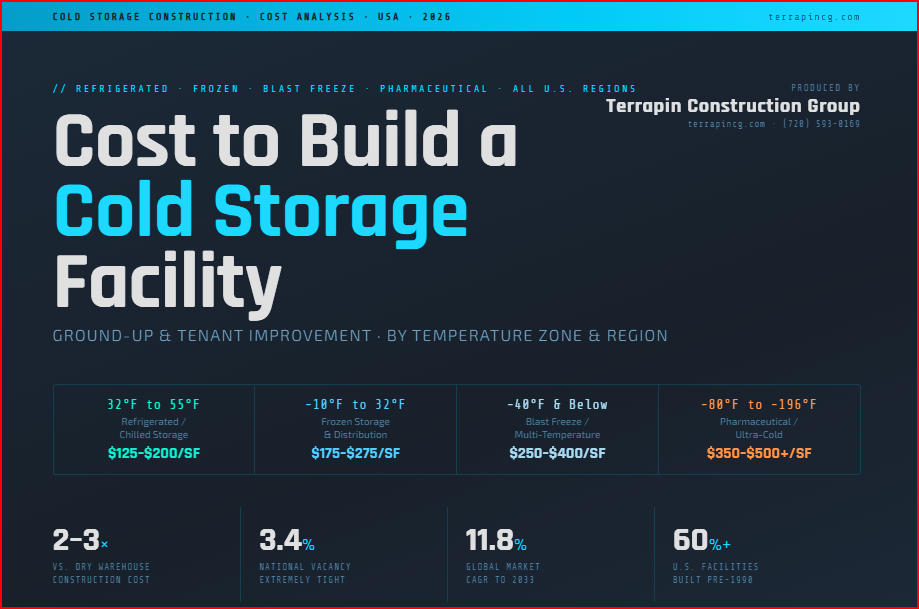
Cold Storage Construction Cost
Refrigerated, frozen, and blast-freeze benchmarks. TI versus ground-up by region.
Read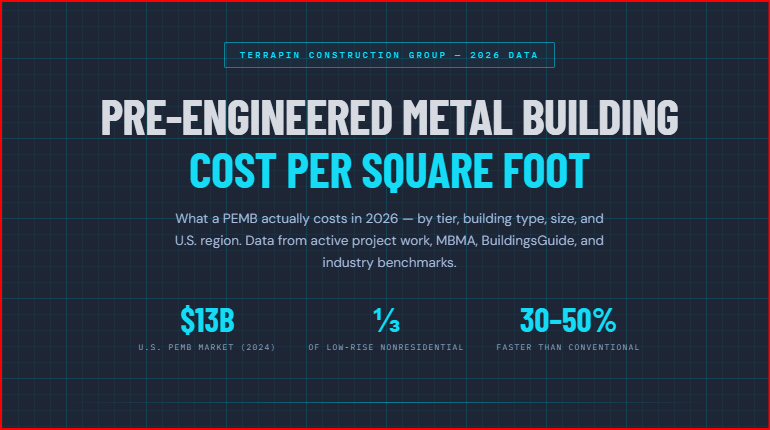
PEMB Cost Per Square Foot
Three pricing tiers, regional variation, finished cost by building type.
Read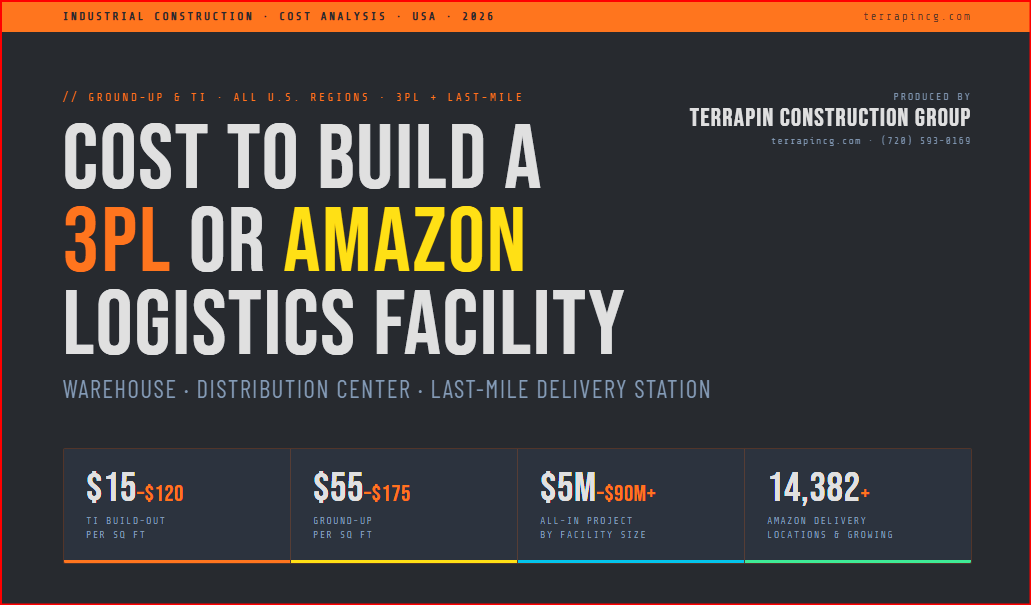
3PL & Logistics Warehouse Cost
Tenant improvement versus ground-up. Logistics-spec cost benchmarks by region.
Read
IMP Supply & Install by State
State-by-state guide for cold storage, food processing, and cannabis envelopes.
Read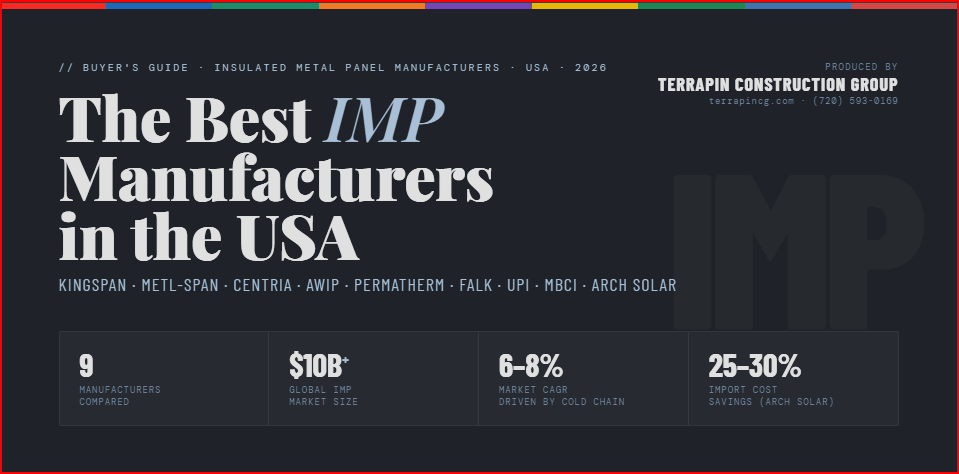
Best IMP Manufacturers Compared
Kingspan, Metl-Span, CENTRIA, AWIP, PermaTherm, FALK, UPI, MBCI, Arch Solar.
Read
A&E Fees & Soft Costs
Fee benchmarks by facility type and region. The soft costs that inflate budgets.
Read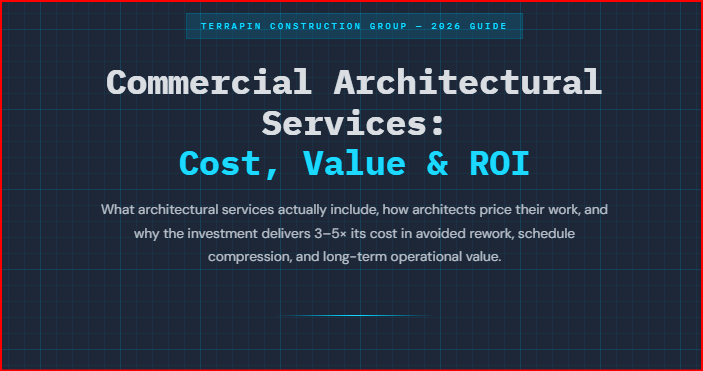
Commercial Architectural Services
Fee structures, cost impact, and why design fees pay for themselves.
Read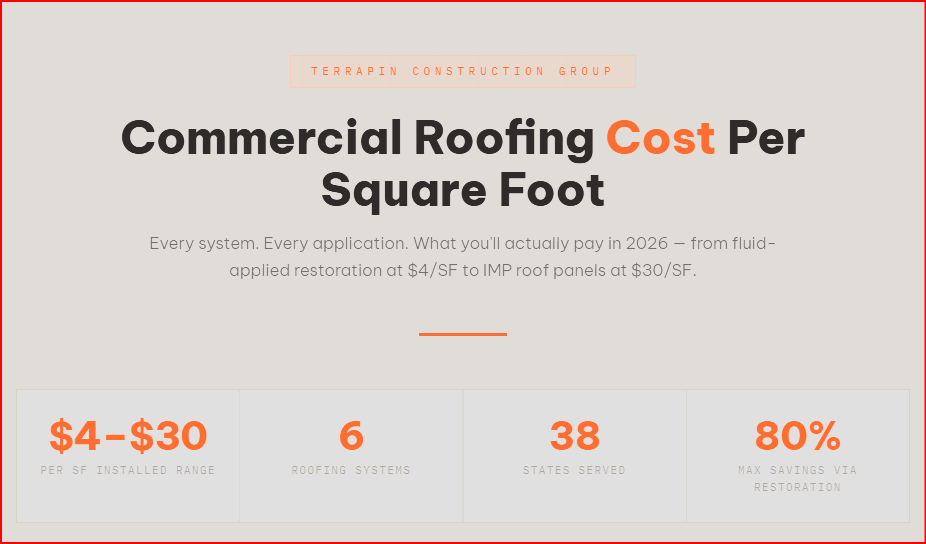
Commercial Roofing Cost
Six roofing systems compared. Replace versus restore economics for owners.
Read
Commercial Flooring Cost
Eight flooring systems ranked by cost. Drivers by building type.
Read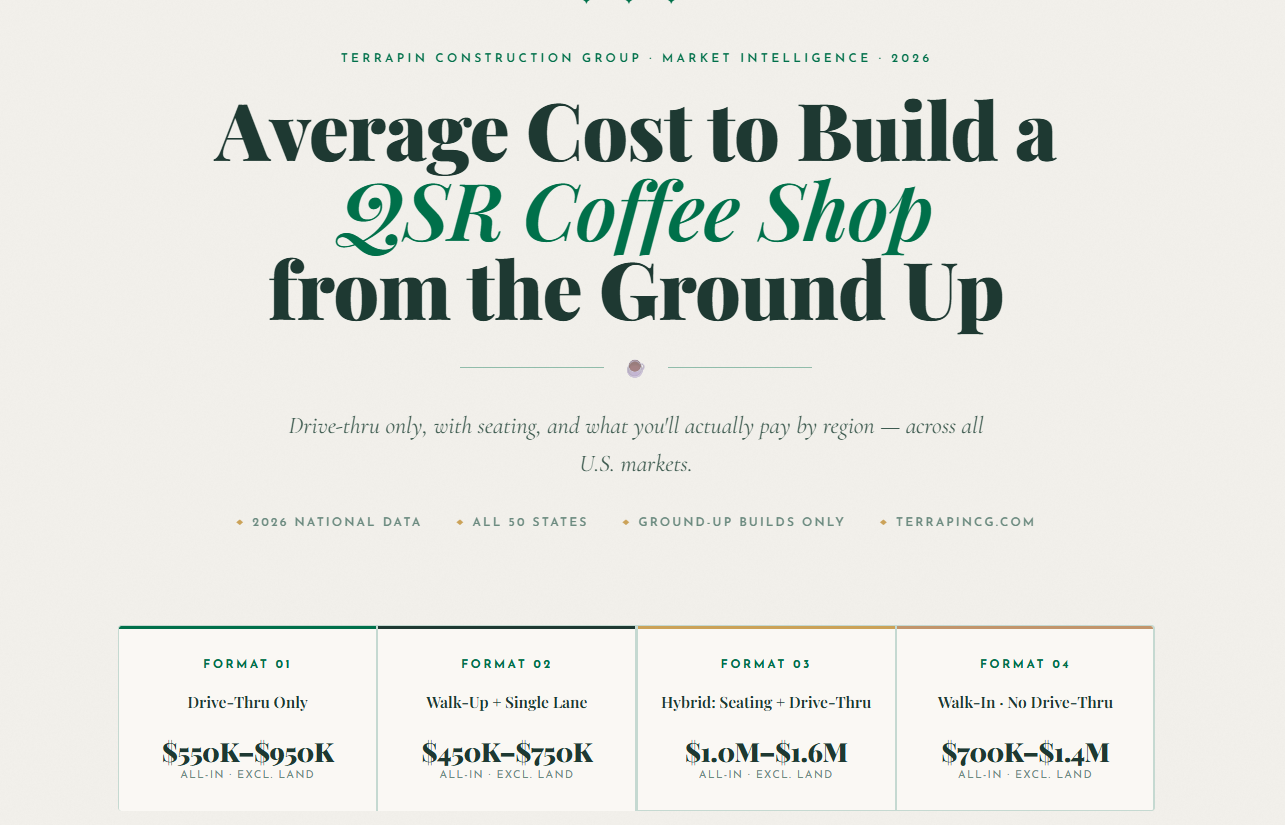
QSR Coffee Shop Cost
Drive-thru, walk-up, hybrid, and seated formats by region.
Read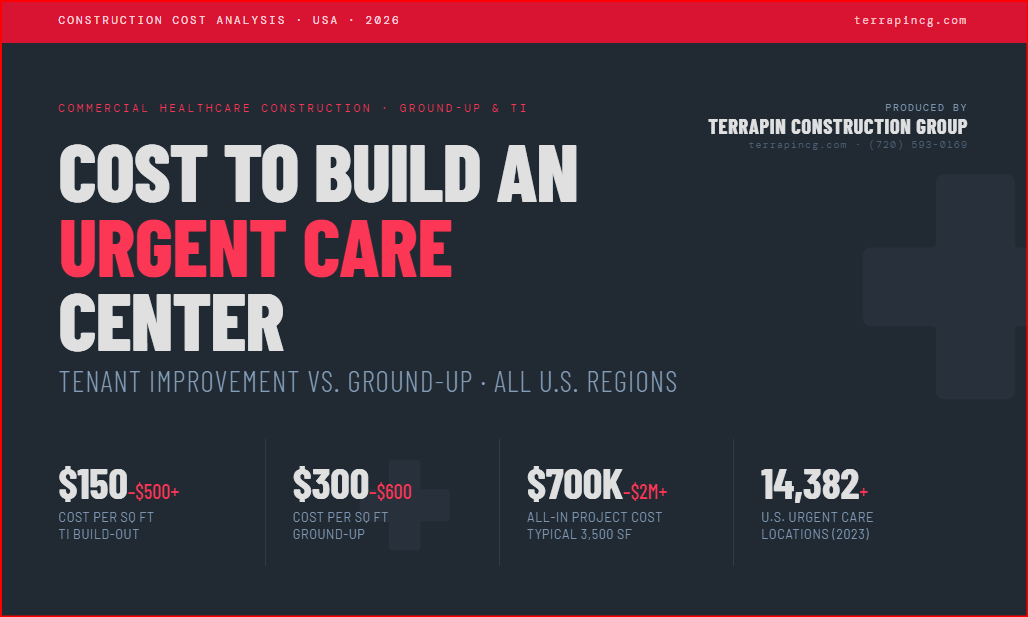
Urgent Care Center Cost
TI versus ground-up by region. X-ray suite and specialty MEP scope.
Read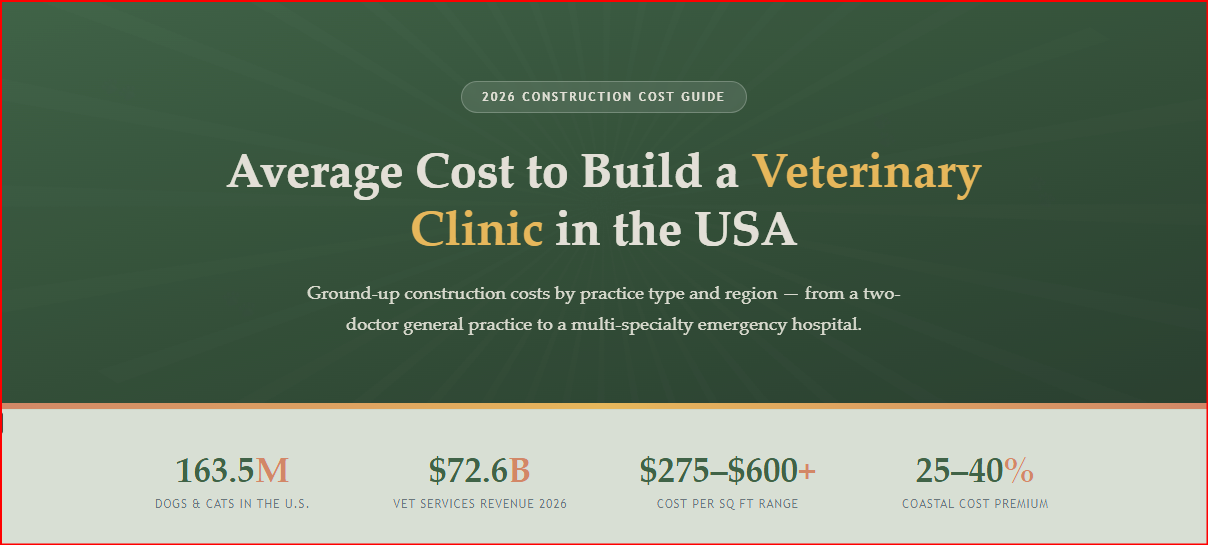
Veterinary Clinic Cost
By practice type and region. Equipment-coordinated MEP scope.
Read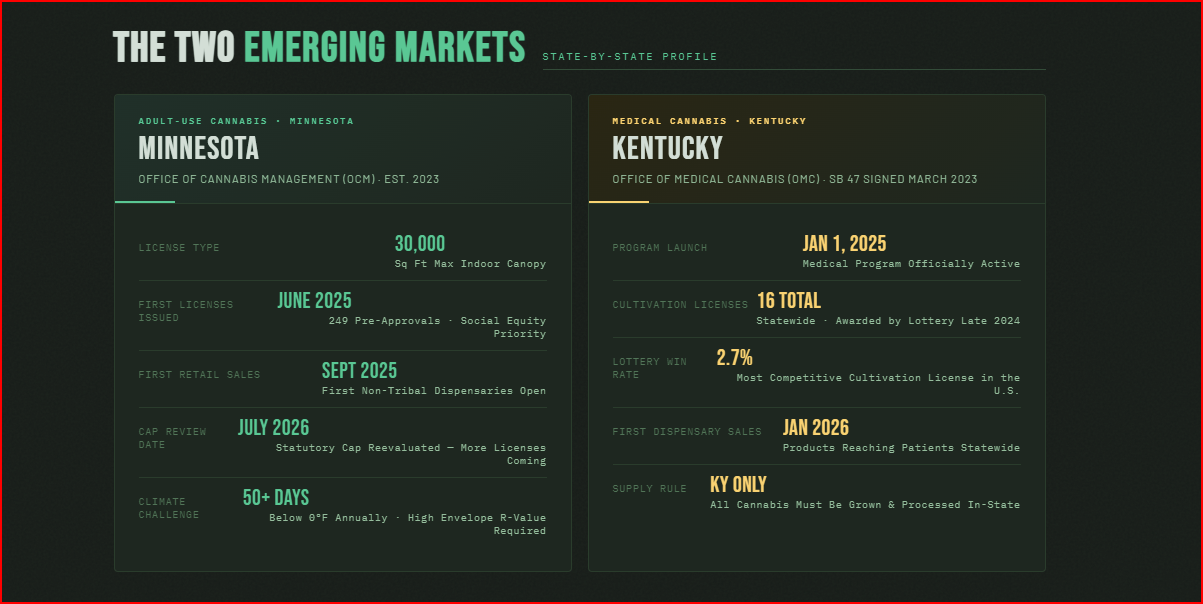
Emerging Cannabis Markets
Where cultivation licensing is opening, and what facilities cost to build.
Read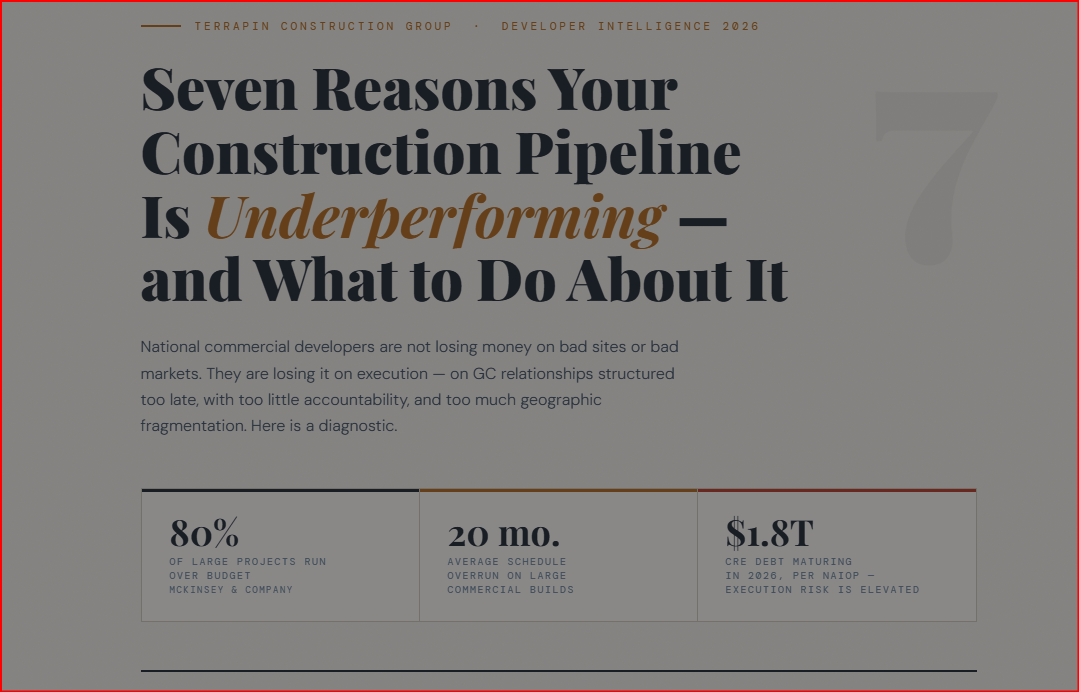
When the GC Relationship Breaks
What national developers actually lose when contractor coordination fails.
Read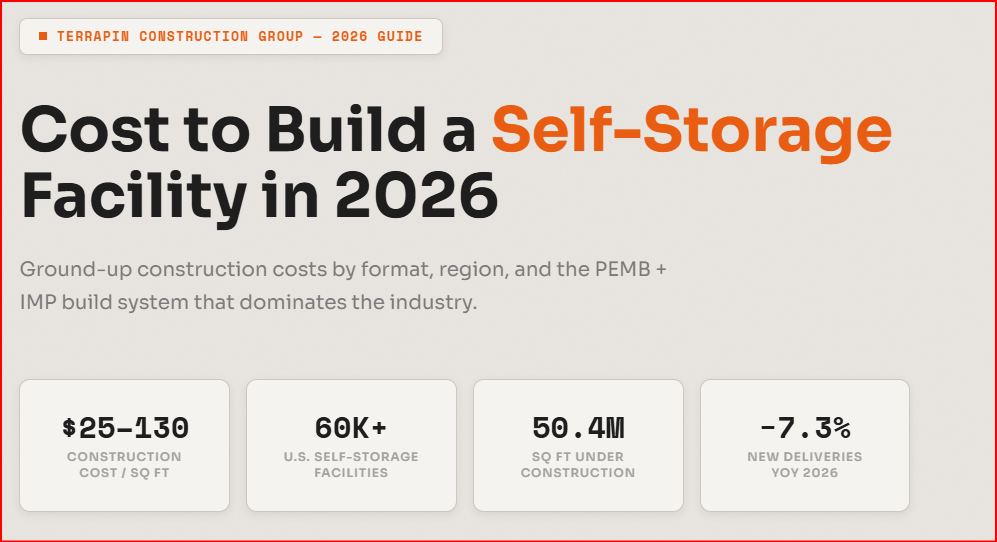
Self-Storage Facility Cost
Climate-controlled multi-story, single-story, and conversion economics.
Read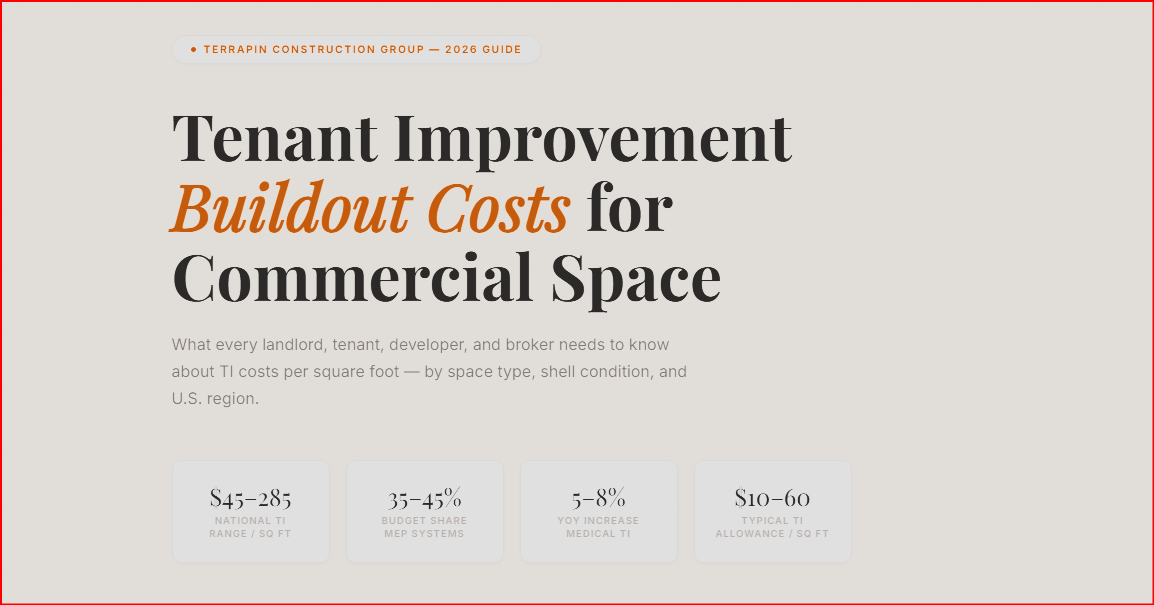
Tenant Improvement Buildout Cost
By space type and region. What actually drives the TI number.
ReadBroker Construction Glossary
The construction vocabulary that shows up in diligence calls, lender conversations, and LOI negotiations. Knowing the language shortens the loops between your client, the lender, and the contractor.
A survey of a building's physical condition, typically prepared to ASTM E2018 standard, identifying immediate repairs and capital replacement reserves. Full PCAs run 3 to 6 weeks and $4,000 to $15,000.
A structured cost-reduction exercise substituting systems, materials, or methods to lower cost without reducing program. Typically recovers 8 to 15 percent of hard costs when run before design locks.
A dense set of 3D measurements captured by laser scanner, producing millimeter-accurate documentation of an existing building for design, condition assessment, and verification.
Conversion of point cloud data into an intelligent building information model that architects and engineers can design against without field measurement.
A delivery method where one firm holds both design and construction responsibility under a single contract, compressing schedule and reducing cost variance versus design-bid-build.
Interior construction adapting leased space to a tenant's requirements, often funded through a landlord TI allowance negotiated in the lease.
A development structure where a building is constructed to a specific tenant's requirements under a pre-executed lease, with the developer carrying construction risk.
Conversion of an existing building to a different use class, such as office to residential, typically triggering full code review for the new occupancy.
Direct construction costs: labor, materials, equipment, and subcontractor work. Distinct from soft costs such as design fees, permits, financing, and legal.
A buyer's attempt to renegotiate price after contract execution, usually triggered by conditions found during diligence. Documented construction input before contract reduces exposure.
A projected allowance for replacing building systems as they reach end of life. Lenders commonly require a documented reserve schedule before closing.
A contract structure where the contractor guarantees the project will not exceed a stated ceiling, with savings below that ceiling shared with or returned to the owner.
Broker FAQ
Every answer leads with a direct, citeable statement. Forward this section to clients, paste answers into pitch decks, or use them to brief associates on how the partnership works.
How does TCG's commercial real estate broker partnership work?
TCG partners with commercial real estate brokers nationwide as a free construction resource for active deals. Brokers introduce transactions that need preliminary cost estimates, property condition assessment support, value engineering exercises, or point cloud building scans, and TCG delivers within 5 to 10 business days at no charge. The partnership includes a written no-conflict commitment and a documented referral incentive program for closed deals. Schedule a partnership call to discuss specifics.
Does TCG charge brokers for preliminary construction estimates?
No. TCG provides free preliminary construction estimates for commercial real estate brokers and their clients on active deals. The TCG.ai construction estimator delivers instant cost benchmarks across every commercial vertical, and the TCG preconstruction team produces hard-priced preliminary budgets within 5 business days for projects past the LOI stage. There is no charge to the broker or the client.
How does TCG ensure no conflict on broker introductions?
TCG's broker partnership operates under a written no-conflict commitment. We will not approach a broker's introduced client about new business without the broker's direct introduction or written consent. The commitment is a term in every broker partnership agreement. Your client stays your client.
How does TCG handle confidentiality on broker-introduced deals?
TCG operates under a written confidentiality commitment to broker partners. We do not shop broker pipelines, share client rosters, or discuss broker deals outside the engagement. NDAs are executed where required by the broker or client. The no-conflict and confidentiality commitments are core terms in every broker partnership agreement.
Does the broker need to be involved after the introduction?
That is the broker's call. Some brokers want every communication routed through them and copied on all correspondence. Others prefer TCG work directly with the client and report back. Both work. The preference is set on the intro call and followed for the duration of the relationship, and it can be changed at any time.
What happens after the first deal in a broker partnership with TCG?
After the first transaction, TCG shifts into an ongoing-resource role. Brokers forward the estimator to clients, loop TCG in pre-LOI where construction input matters, and pull updated cost benchmarks, market intelligence, and vertical-specific guidance as needed. The free estimating, PCA support, value engineering services, and preferred-rate reality capture engagements continue as long as the partnership is active.
Can TCG work with brokers from CBRE, JLL, Cushman & Wakefield, Colliers, and other major firms?
Yes. TCG works with brokers from major commercial real estate firms including CBRE, JLL, Cushman & Wakefield, Colliers, Marcus & Millichap, Newmark, Avison Young, Lee & Associates, NAI Global, SVN International, Coldwell Banker Commercial, KW Commercial, and Compass Commercial, as well as regional and independent brokerages nationwide. TCG has no exclusive arrangement with any brokerage.
At what stage of a deal should a broker bring in a general contractor?
Before the letter of intent is signed, not after. Construction cost is the variable most likely to change a client's decision, and it is far cheaper to discover a problem during site selection than during design. On tenant rep assignments that means pricing buildouts across the shortlist. On investment sales it means validating rehab scope before the offer. Post-LOI, the contractor's role shifts from informing the decision to executing a commitment already made.
What information does a contractor need to produce a preliminary estimate?
At minimum: building type and intended use, approximate square footage, location down to the city, whether the work is ground-up or interior, and target delivery timing. Anything additional sharpens the number, including a site plan or floor plan, a description of mechanical and electrical scope, finish level expectations, and known site constraints. An estimate can be produced from the minimum set, with the accuracy range widening accordingly.
How accurate is a preliminary construction estimate?
A preliminary estimate produced from building type, size, location, and scope description is a budget-level number intended for underwriting and go or no-go decisions, not for contracting. Accuracy tightens substantially once drawings exist, subcontractor pricing is solicited, and site conditions are verified. Treat it as a range for testing whether a deal pencils, and expect the number to move as design develops.
Can commercial real estate brokers forward the TCG.ai estimator to clients?
Yes. The TCG.ai construction estimator is built to be forwarded. Brokers send the link to clients during property tours, in pitch decks, and as part of pre-LOI underwriting packages. The estimator is free for unlimited use and produces market-calibrated cost benchmarks across every commercial building type including ground-up, tenant improvement, repositioning, and ground lease scenarios.
Can TCG price a project in a market where it has no completed work?
Yes. Pricing is built from current subcontractor data, material costs, and regional labor rates rather than solely from past projects in that specific market. Where TCG has no local subcontractor relationships, that is disclosed and the estimate carries a wider range until local pricing is solicited. TCG is licensed in all 50 states and will say plainly when a market requires additional legwork to price with confidence.
How long does a value engineering exercise take?
TCG typically completes a preliminary value engineering exercise within 5 to 10 business days. The output identifies cost reductions through structural system substitution, MEP coordination, envelope alternates, and equipment specification, typically recovering 8 to 15 percent of hard costs without compromising program or quality. The deliverable is a written report your client can hand to their CFO, lender, or investment committee.
What is the typical project size TCG handles?
TCG handles commercial construction projects ranging from roughly $1 million to $30 million, scaling to larger projects case by case through subcontractor and partner network coordination. The firm operates lean by design, with direct partner-level engagement on every project rather than layered estimator to project manager to superintendent communication.
How are 2026 interest rates and tariffs affecting commercial real estate deals?
They are widening the gap between asking prices and what buyers can underwrite. The Federal Reserve raised its target range to 3.75 to 4.00 percent on September 16, 2026, putting prime at 7.00 percent, and the 10-year Treasury near 4.94 percent keeps permanent loan constants high. On the cost side, construction input prices were up 8.9 percent year over year in August 2026, and Section 232 tariffs of 50 percent on steel, aluminum, and copper have pushed metal and electrical scopes hardest. For brokers, that means construction budgets need an explicit 5 to 9 percent escalation allowance on metal and MEP-heavy scopes, and clients should size the loan before committing to a price. Run the numbers in the TCG.ai estimator and the construction loan qualifier, and see the commercial construction costs hub for current benchmarks.
Which 2026 tax changes should brokers flag to clients on construction deals?
Four come up most. 100 percent bonus depreciation is now permanent for eligible property acquired after January 19, 2025. New manufacturing buildings can qualify for 100 percent expensing as qualified production property if construction begins after January 19, 2025 and before January 1, 2029. The Section 179D energy-efficient building deduction ended for projects whose construction began after June 30, 2026. Opportunity Zones are now permanent, the new zone map takes effect January 1, 2027, and gains deferred into original Opportunity Zone investments must be recognized by December 31, 2026. Construction start dates drive several of these, so check the permit timeline estimator early. Clients should confirm eligibility with their tax advisor. The finance and owner advisory guide covers each one.
How fast can TCG provide a property condition assessment for a commercial real estate transaction?
TCG provides broker-side construction input within 5 to 10 business days, compared with the 3 to 6 weeks typical of a full ASTM E2018-compliant Property Condition Assessment. The deliverable includes site walks, system condition opinions, immediate-repair cost ranges, and capital-replacement reserves. For transactions requiring a full ASTM-compliant PCA, TCG coordinates with engineering partners to compress the total timeline.
What is the difference between a Property Condition Assessment and TCG's broker construction memo?
A traditional PCA is a third-party engineering deliverable compliant with ASTM E2018, typically taking 3 to 6 weeks and costing $4,000 to $15,000 depending on building size. TCG's broker construction memo is faster at 5 to 10 business days and free for active broker deals. It provides construction-side opinions on system condition, repair costs, and capital reserves, commonly used to inform LOI underwriting before a full PCA is commissioned. It is not a substitute for an ASTM-compliant PCA where a lender requires one.
What does a broker construction memo actually contain?
A typical memo covers observed condition of the structure, roof, envelope, and mechanical, electrical, and plumbing systems, plus estimated remaining useful life for major systems, immediate repair items with cost ranges, a capital replacement reserve outlook, code and accessibility deficiencies observed, and a summary of items warranting further investigation by a licensed engineer. It is written to be readable by a client and their lender.
Is there a cost to the broker or the client for PCA support?
No, for active broker-introduced deals. The construction memo, preliminary estimating, and value engineering work are provided at no cost. Point cloud scanning through Reality Capture Atlanta is a paid engagement offered at preferred partner rates. Where a project requires a licensed engineer, environmental consultant, or ASTM-compliant PCA, those are separately engaged third-party costs.
Does TCG provide point cloud building scans for commercial transactions?
Yes, through partnership with Reality Capture Atlanta. Point cloud scans deliver millimeter-accurate 3D documentation of existing commercial buildings, accelerating PCA work, repositioning analysis, investment sales packaging, and tenant improvement pricing. Engagements typically deliver in 5 to 10 business days, with broker-introduced deals receiving preferred partner rates.
How much does a point cloud building scan cost?
Commercial point cloud scan engagements typically run $4,000 to $15,000 depending on building square footage, level of detail, and whether scan-to-BIM modeling is included. Scanning a single-story warehouse sits at the low end. A multi-story building with complex MEP documentation sits at the high end. Broker-introduced deals receive preferred partner rates.
How does a point cloud scan reduce risk on an investment sale?
A scan replaces subjective inspection notes with measured evidence. Sellers who include point cloud data in an offering memorandum give buyers a faster path to underwriting and reduce the grounds available for a re-trade. Buyers use the same data to eliminate the design team's field measurement effort on a repositioning, which typically pulls weeks out of concept design and narrows the rehab cost range before the offer is made.
Does Terrapin Construction Group work in all 50 states?
Yes. Terrapin Construction Group is licensed and actively building in all 50 states. TCG is headquartered in Denver, with active project work across all six major commercial construction regions: West Coast, Mountain West, Southwest, Southeast, Midwest, and Northeast.
What commercial verticals does TCG build?
TCG builds across 14 commercial verticals: warehouse and cold storage, cannabis facilities, data centers, healthcare and medical office, hotel, restaurant and QSR, industrial and advanced manufacturing, life sciences and biotech labs, self-storage, grocery-anchored retail, urgent care, veterinary clinics, controlled environment agriculture, tenant improvement and buildouts, and adaptive reuse and conversions.
Does TCG work on tenant improvement and commercial buildout projects?
Yes. TCG provides commercial tenant improvement and buildout services across all commercial verticals. TI work includes office buildouts, retail fit-outs, restaurant and QSR buildouts, medical and dental TI, and full repositioning of existing space. The free estimator and 5-day preliminary budget service support tenant rep brokers pricing buildouts across multiple comparable sites before the LOI is signed.
Can TCG help with adaptive reuse and conversion projects?
Yes. TCG works on adaptive reuse and building conversions including office to residential, retail to medical, and warehouse to data center. Conversion projects require early construction input because change of use triggers full code review for the new occupancy class, and structural, MEP, and envelope implications frequently determine whether the conversion economics work at all.
Does TCG provide cost estimates for cannabis facility construction?
Yes. TCG has direct project experience in cannabis cultivation, processing, and dispensary construction across emerging and mature markets. Estimates account for state-specific regulatory requirements, cultivation environment specifications, and the IMP envelope requirements common to cultivation builds. On cannabis deals, state and local licensing often drives the schedule more than construction does, which is worth flagging to clients early.
How does TCG's IMP installation specialty benefit commercial real estate brokers?
TCG has self-performed over 1 million square feet of insulated metal panel installation across 38 states over 10 years, with direct manufacturer relationships including Kingspan, Metl-Span, CENTRIA, AWIP, PermaTherm, FALK, UPI Panels, MBCI, and Arch Solar. For brokers, that matters on cold storage, food processing, cannabis, data center, cleanroom, and pharmaceutical transactions where envelope performance is mission-critical and most regional general contractors lack the install experience to price the work accurately.
Does TCG offer owner's representative or construction management services?
Yes. Beyond general contracting, TCG provides owner's representative services and construction management for clients who want independent oversight rather than a construction contract, along with preconstruction, architectural design-build, MEP engineering, and structural engineering. On broker-introduced deals where the client already has a contractor, owner's representative is often the right engagement.
What is design-build delivery and why do brokers care about it?
Design-build is a single-source project delivery method where one firm holds responsibility for both design and construction under a unified contract, in contrast to design-bid-build where the architect and contractor work under separate contracts. Research published by the Design-Build Institute of America and Penn State has found design-build projects deliver faster and with less cost growth than design-bid-build. For brokers, that means fewer post-LOI surprises and a shorter path from lease execution to occupancy. See TCG design-build services.
Where can brokers find TCG's construction cost, process, building systems, and finance guides?
TCG publishes four free resource hubs built to be forwarded to clients. The Commercial Construction Costs hub covers cost per square foot by building type, region, and trade. The Construction Process and Project Delivery guide covers delivery methods, contracts, escalation clauses, and scheduling. The Building Systems and Specialty Trade guide covers insulated metal panels, PEMB, roofing, MEP, and long-lead electrical equipment. The Construction Finance and Owner Advisory guide covers rates, construction loans, and 2026 tax incentives. Each was updated in September 2026.
What is TCG's broker referral incentive program?
TCG operates a referral incentive program for commercial real estate brokers whose introductions result in closed construction projects. The structure is documented per partnership in a written referral agreement, tied to billing milestones on the closed project, and competitive with what brokerage firms typically pay for transaction-side referral relationships. Specific rates and timing are discussed on the initial partnership call and committed to in writing. See the referral program page.
Sources & References
These are the standards, associations, and data sources referenced in the claims on this page. Each entry notes what it was used for, so brokers and their clients can verify a specific figure rather than wade through a link list.
Standards & Methodology
Used for the PCA scope, timeline, and cost claims, and the design-build delivery comparison.
- ASTM E2018The Property Condition Assessment standard referenced throughout this page.
- Design-Build Institute of AmericaSource for design-build versus design-bid-build delivery performance research.
- International Code CouncilIBC use-group requirements cited in the adaptive reuse and conversion sections.
- American Institute of ArchitectsStandard contract forms referenced in the GC contract and schedule of values discussion.
- Associated General ContractorsIndustry practice standards for commercial general contracting.
- Construction Specifications InstituteDivision structure used in trade-level estimating and schedules of values.
Cost Data
Used to benchmark the hard cost and soft cost figures in TCG estimates and in the linked cost guides.
- RSMeans / GordianThird-party cost indices TCG benchmarks preliminary budgets against.
- US Census Construction DataConstruction spending and put-in-place data by sector.
- BLS Construction Industry DataConstruction employment and wage data underlying regional labor rate assumptions.
- FRED Construction IndicesMaterial cost and producer price index series used for escalation.
- Engineering News-RecordConstruction Cost Index and market reporting.
- Associated Builders and ContractorsConstruction input price data (August 2026 release) behind the escalation guidance in the FAQ.
- Federal Reserve H.15 Selected Interest RatesPrime rate and Treasury yields as of September 17, 2026, cited in the rates FAQ.
Industry Associations
The professional bodies whose members make up TCG's broker and owner client base, referenced by name on this page.
- CCIM InstituteInvestment sales credentialing body referenced in Section 01.
- SIORIndustrial and office broker credentialing body referenced in Section 01.
- NAIOPCommercial development association referenced in Sections 01 and 05.
- ICSCRetail real estate association referenced in the verticals section.
- National Multifamily Housing CouncilMultifamily developer association referenced in the verticals section.
- BOMA InternationalBuilding owner and manager association referenced in the reality capture section.
- Urban Land InstituteLand use research organization referenced in the reality capture section.
- National Association of RealtorsCommercial real estate market data and practice standards.
Let's build something together.
Whether you are sourcing a number for a tour next Tuesday, validating a building condition before a contingency deadline, or evaluating a partnership across your full portfolio, TCG is one call away. The estimator is free, the partnership conversation is no-pressure, and your client stays your client.
Headquartered. Active. Building.
Our Denver headquarters anchors coast-to-coast project work. Licensed and active in all 50 states.