
Minneapolis Data Center & Critical Infrastructure Construction
Design-build data center construction across the Twin Cities: powered shell, enterprise, Tier III, Tier IV, AI-HPC, and data hall fit-out. MISO grid and Xcel Energy coordination, cold-climate free cooling advantage, Minnesota Energy Code continuous-insulation envelopes, and winter sequencing built into preconstruction.
How TCG Builds Data Centers in the Twin Cities
Minneapolis is a moderate data center market versus DFW or Northern Virginia, but Fortune 500 density (3M, Target, UnitedHealth, Best Buy, U.S. Bancorp, Ecolab, Cargill) drives enterprise data center pipeline that the megacities do not have. Twin Cities cold climate is also a real economic advantage: outdoor air sits below 65°F roughly 6 to 7 months per year, which lets economizer cooling cut annual chiller runtime 30 to 50 percent versus a Sunbelt facility of the same IT load.
MISO grid (Midcontinent ISO) is generally more predictable than ERCOT, but Xcel Energy transformer lead times still run 30 to 60 weeks. We coordinate utility capacity from preconstruction because power is the binding constraint on substation-scale builds. Minnesota also has a 2040 carbon-free electricity policy that shapes hyperscale tenant PPA negotiations and site selection near generation. For AI-HPC, direct liquid cooling benefits from low outdoor dry-bulb temperature because dry coolers reject heat more efficiently in cold air.
The cold climate also drives envelope and operational design. Minnesota Energy Code is stricter than IECC and requires continuous insulation; self-performed IMP envelopes satisfy this natively and handle snow load (35 psf ground), ice damming at parapets and penthouse curbs, and the winter sequencing that pushes envelope closure ahead of November. Generator yards need proper winter operability (block heaters, fuel additives, screened access in snow), which we engineer with our in-house MEP team. Design-build compresses program 15 to 30 percent against design-bid-build.
Twin Cities Data Center Cost Per Square Foot
Twin Cities data center construction runs $345 to $1,330 per SF depending on tier. Multiplier 1.00 to 1.15x of national. Continuous-insulation envelopes, frost-protected foundations, and union mechanical/electrical labor raise the floor versus Sunbelt markets but free cooling and stable MISO grid offset operating cost over the asset life.
300,000 SF Data Center Support Campus, North of Dallas
TCG erected and insulated three 100,000 SF pre-engineered metal buildings for the staging and storage campus of a new data center north of Dallas, Texas. Building 1 went from start of steel erection to sign-off in 41 days, and the full campus finished 30 days ahead of schedule.
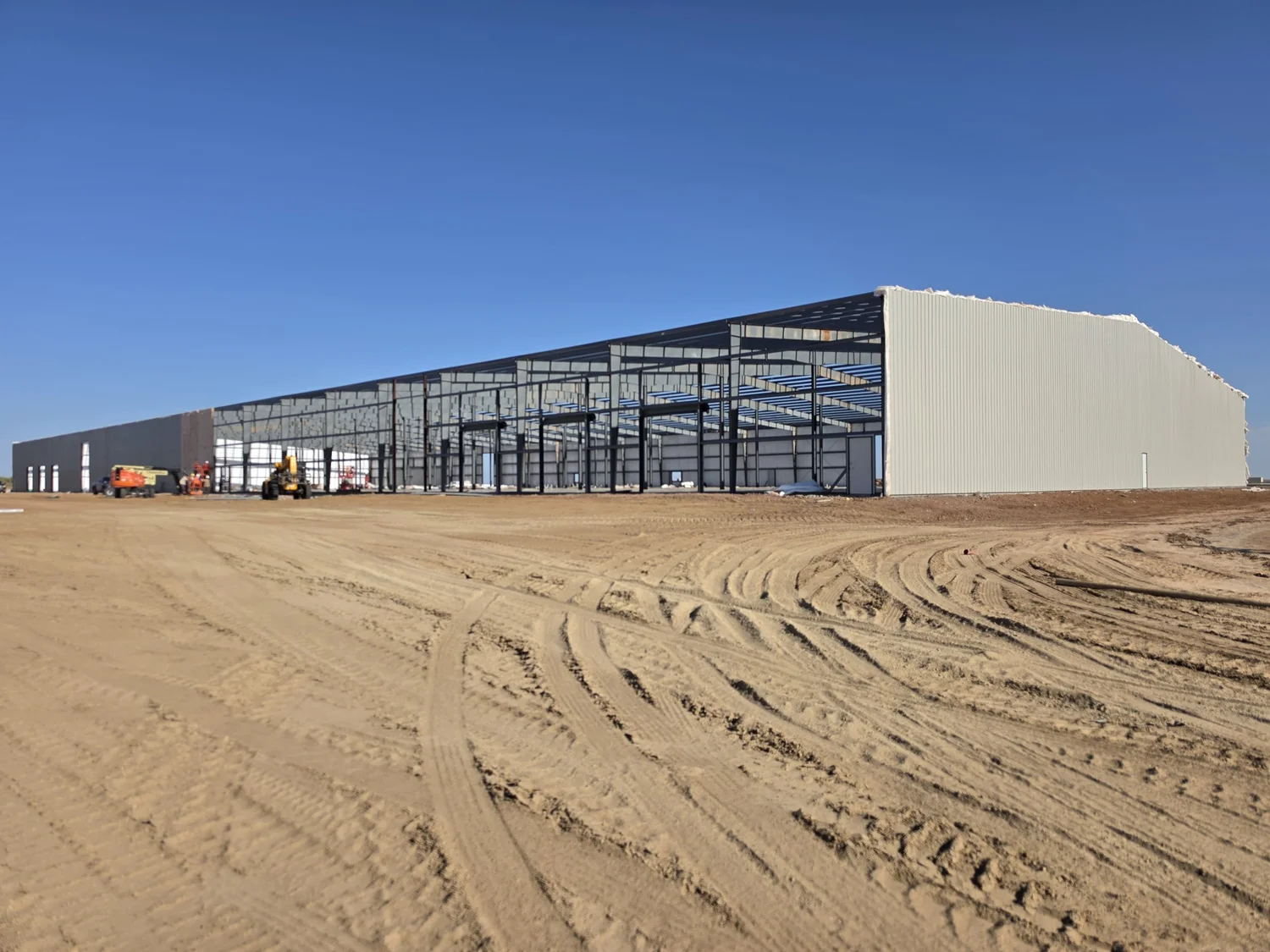
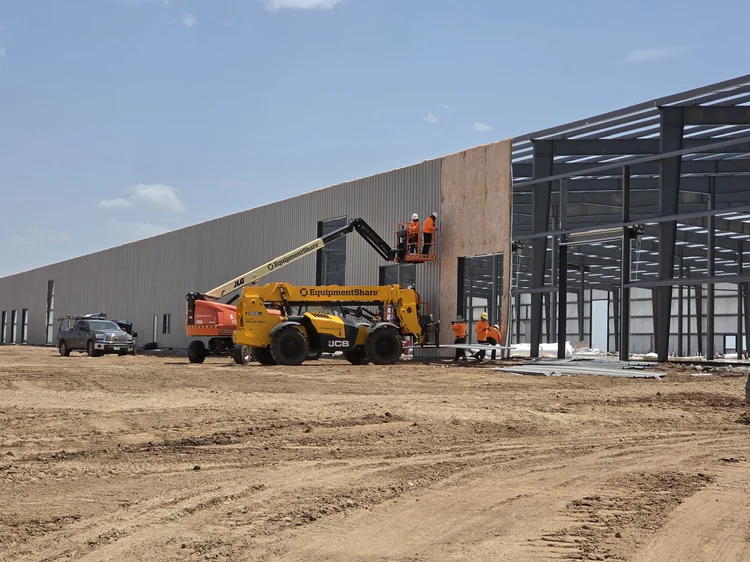
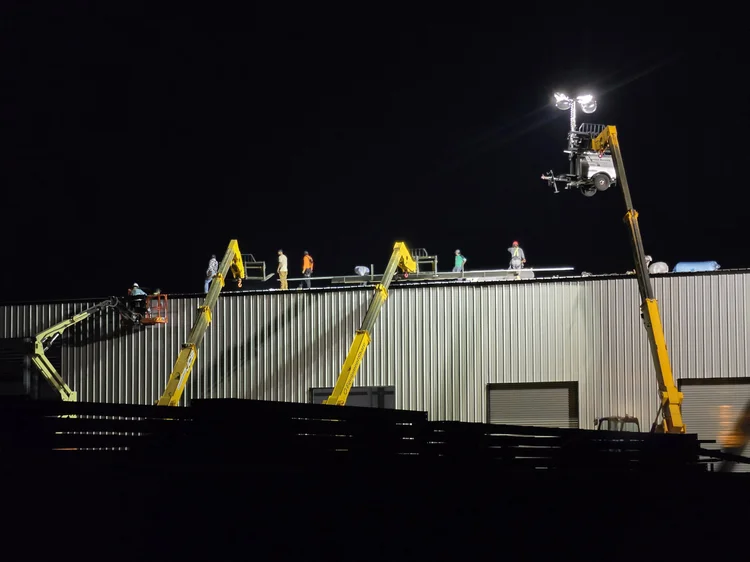

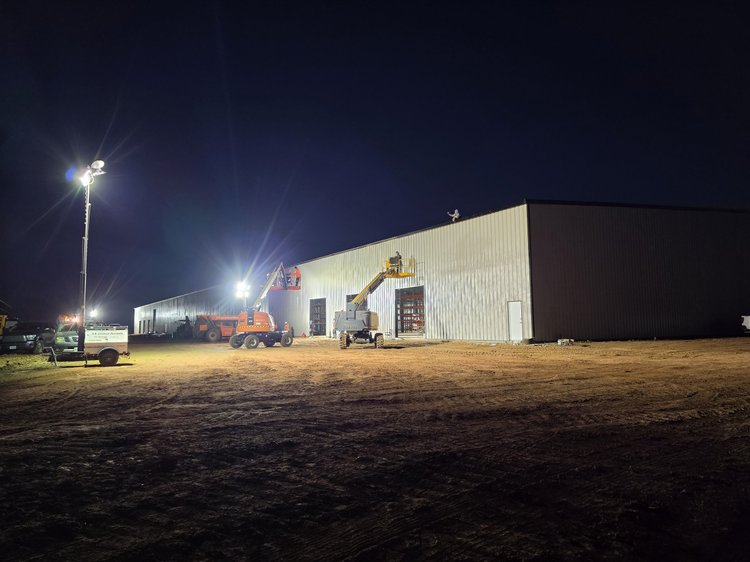
On a data center campus the support buildings come first: staging, equipment storage, and laydown have to be dried in before long-lead electrical and mechanical gear arrives for the data hall. Crews ran early morning and night shifts under light towers, with roof panels, wall cladding, and insulation moving in parallel instead of in sequence.
TCG brings the same schedule-first crews and PEMB and IMP self-perform capability to data center projects in Minneapolis.
- Scope: PEMB steel erection, roof and wall panels, and insulation
- Use: staging and equipment storage for a new data center campus
- Schedule: parallel crews on extended shifts
- Result: 300,000 SF delivered 30 days early
Full photo gallery on the project spotlight.
Minneapolis Data Center Construction FAQ
Common questions about data center and critical infrastructure construction in the Twin Cities.
TCG most recently erected and insulated a 300,000 SF data center support campus north of Dallas, Texas: three 100,000 SF pre-engineered metal buildings for a new data center’s staging and storage campus. Building 1 went from start of steel erection to sign-off in 41 days, and the full campus finished 30 days ahead of schedule in fall 2026. TCG brings the same crews and self-perform capability to data center projects in Minneapolis.
Twin Cities data center construction runs $345 to $1,330 per SF depending on tier. Powered shell $200 to $432, enterprise $345 to $640, Tier III $565 to $1,120, Tier IV/AI-HPC $850 to $1,330, data hall fit-out $245 to $660. Minneapolis is a moderate data center market versus DFW or Northern Virginia, but cold-climate free cooling and stable MISO grid pricing are real advantages. See national data center cost guide.
Powered shell builds (developer-led, future tenant fit-out), enterprise data centers (single occupier, Fortune 500 HQ adjacency), Tier III certified colocation, Tier IV and AI-HPC where market demand supports, and data hall fit-out within existing shells. Twin Cities Fortune 500 density (3M, Target, UnitedHealth, Best Buy, U.S. Bancorp, Ecolab) drives enterprise data center pipeline. See core sector page.
Free cooling. Twin Cities outdoor air sits below 65°F roughly 6 to 7 months per year (October through April), which lets air-side and water-side economizers cut chiller runtime materially. Annual cooling energy can drop 30 to 50 percent versus a Texas or Arizona facility of the same IT load. AI-HPC racks with direct liquid cooling benefit further because outdoor dry-bulb temperature governs how efficiently the dry coolers reject heat.
MISO interconnection and Xcel Energy capacity. MISO is generally more predictable than ERCOT but transformer lead times still run 30 to 60 weeks. We coordinate Xcel (or Connexus, Dakota Electric, Great River Energy depending on site) service capacity from preconstruction. Minnesota also has aggressive renewable energy policy (carbon-free electricity by 2040) which affects siting near generation and PPA structures for hyperscale tenants.
Minnesota Energy Code is stricter than IECC and requires continuous insulation on the building envelope. For data centers, that pushes IMP cladding (which delivers continuous insulation natively) over standard tilt-up with batt insulation. Self-performed IMP envelopes also handle the snow load and ice damming details that matter at parapets, mechanical penthouses, and generator yards.
Yes. Data hall fit-out within powered shells or existing facilities runs $245 to $660 per SF depending on density, containment strategy (hot aisle, cold aisle, full containment), PDU configuration, and CRAH/CRAC selection. Fit-out is typically 6 to 14 months versus 14 to 24 months for ground-up. Design-build compresses both.
Ground-up data centers in the Twin Cities permit through Minneapolis CPED or Saint Paul DSI for in-city builds, or the suburban authority (Bloomington, Plymouth, Eden Prairie, Maple Grove, etc.) for suburban sites. Hennepin, Ramsey, Dakota, and Anoka County review applies to unincorporated parcels. Typical timeline 4 to 9 months. MISO interconnection runs in parallel and is the longer pole on substation-scale builds.
Winter exterior work November through March typically requires temporary enclosure for masonry, sealants, and coatings, plus heated concrete cure on slabs poured below 40°F. We schedule envelope closure ahead of winter when possible so interior MEP, fit-out, and commissioning continue uninterrupted. Snow load (35 psf ground), ice damming at parapets, and generator yard access in winter all get coordinated from schematic design.
Diesel or natural gas generators sized for full IT load plus cooling, with N+1 or 2N redundancy depending on tier, located in screened generator yards with sound attenuation and proper winter operability (block heaters, fuel additives). Minnesota cold can pose starting reliability issues for diesel below 0°F if cold-weather provisions are missed. We engineer generator yard and fuel oil systems in-house with our MEP team.
Ground-up enterprise data center: 15 to 26 months from groundbreak (winter sequencing adds vs Sunbelt). Tier III/IV: 19 to 30 months. AI-HPC where present: 22 to 36 months. Powered shell: 11 to 16 months. Data hall fit-out: 6 to 14 months. Add 4 to 12 months of preconstruction, design, and permitting. MISO substation builds run on their own 18 to 30 month timeline and are typically the binding constraint for large projects.
Suburban Hennepin and Dakota County sites (Eden Prairie, Plymouth, Burnsville, Eagan, Inver Grove Heights), plus City of Minneapolis and Saint Paul where adaptive reuse and infill make sense. Greater Minnesota for power-cost-driven sites near generation. See core sector page.
Build Your Twin Cities Data Center
From an Eden Prairie Tier III colocation to a Plymouth Fortune 500 enterprise build to a Bloomington data hall fit-out to a Greater Minnesota hyperscale shell, TCG delivers design-build data center construction across the Twin Cities with in-house MEP and structural and self-performed cold-climate IMP envelope.
Schedule a Minneapolis Data Center Consultation