

Construction-to-Perm Loan Conversion (2026): Single-Close, Two-Close, and the Recourse Shift
Most owners think of a construction-to-perm loan as one product. It's two products bolted together with a conversion event in between, and the conversion event is where the deal economics live or die. We'll walk how single-close and two-close work mechanically, when each pencils, and what actually happens at the conversion — including the recourse shift that's the main reason single-close exists.
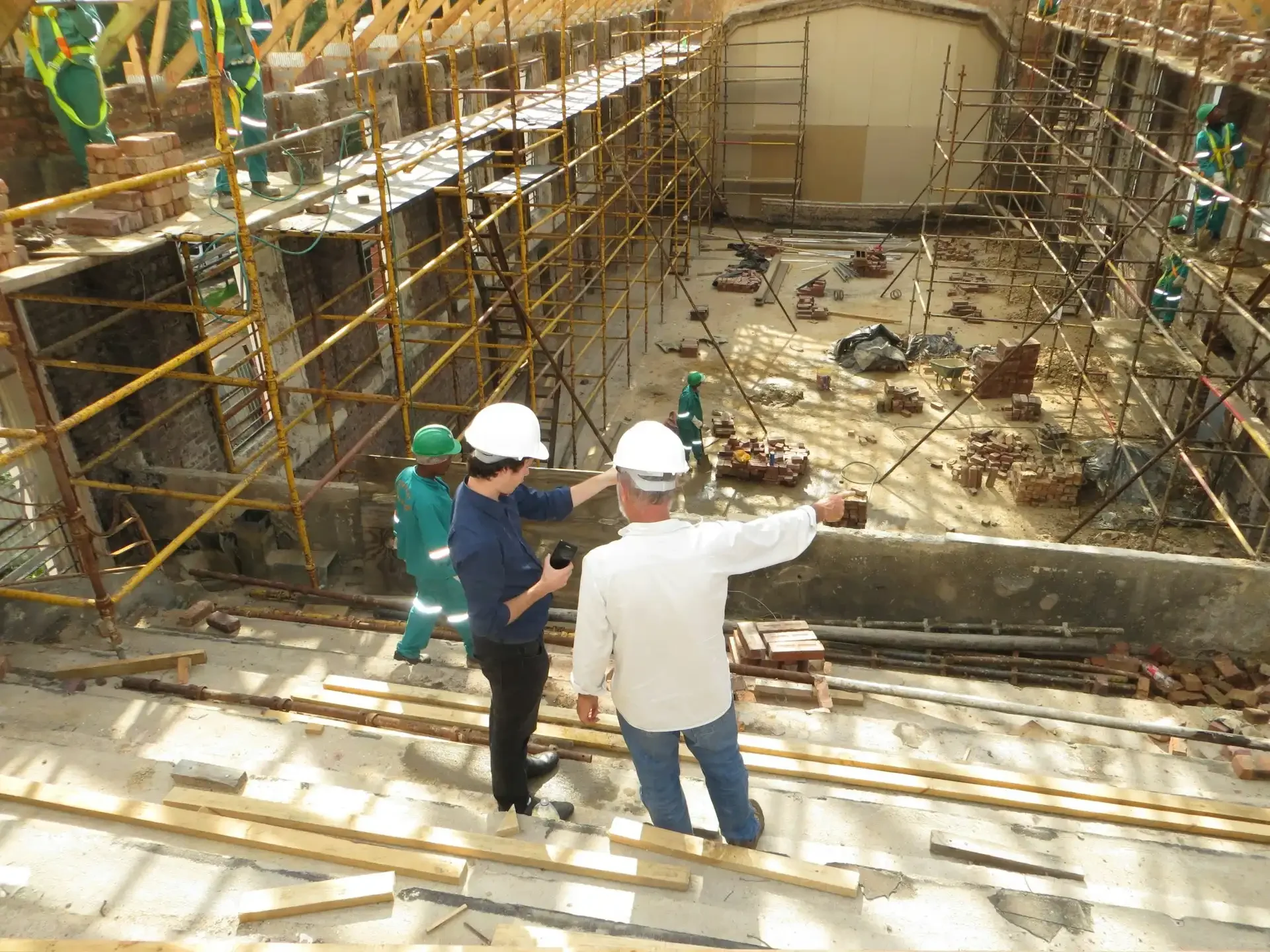
The bank doesn't think about your project as construction. The bank thinks about your project as a credit exposure that's full-recourse during construction and (hopefully) non-recourse after. The construction-to-perm loan is the financial instrument that bridges those two phases. How that bridge is structured — single-close or two-close, with rate-lock or without, with what conversion conditions — determines whether the project closes on the terms you signed or has to be re-shopped at the worst possible moment.
Most commercial owners we work with on $5M to $30M projects encounter C-to-P structure decisions for the first time at term-sheet stage with their bank. By then, the architecture choice is usually locked in by the lender's loan committee. This piece is the upstream version — what to know before you sign the term sheet, and what to push back on. For the related question of how much owner contingency to budget alongside loan proceeds, see our construction contingency by project type guide.
Single-Close vs Two-Close: The Structural Decision
Single-close (also called one-time-close, or OTC) means the borrower closes once on a single set of loan documents that contain both the construction phase mechanics and the permanent loan parameters. The construction phase funds as draws against committed permanent loan terms. At completion, the loan converts administratively — no second underwriting, no second appraisal-driven sizing, no second closing costs.
Two-close means the borrower closes a construction loan first (typically 18 to 36 months term, full-recourse), then has to source and close a separate permanent loan before the construction loan matures. That's two underwriting cycles, two sets of closing costs, and exposure to whatever the permanent market looks like at conversion. If rates have moved 200 basis points, the borrower eats it. If the appraisal at takeout doesn't support the planned permanent sizing, the borrower has to bring more equity or shrink the loan. The Federal Reserve H.15 selected interest rates are the closest thing to a daily reference for where the two-close take-out market is heading.
Bars below show approximate borrower take-out risk exposure across the three structures — wider fill means more risk concentrated on the borrower at conversion.
Single-Close (OTC)
Construction + perm pre-underwritten. Conversion is administrative. Lower take-out risk. Recourse shift baked in. Typical for owner-occupied $1M–$15M; SBA 504 effectively works this way.
Two-Close (Separate Loans)
Construction with one lender, perm shopped separately near completion. Higher closing-cost duplication ($25k–$90k). Borrower carries take-out risk. Right when you plan to migrate to agency or life-co perm.
Mini-Perm (Bridge Variant)
Construction phase converts to a short-term mini-perm (3–7 yr) for stabilization, then refinanced to long-term perm. Used on lease-up risk deals where final NOI isn't underwritable at construction loan close.
What Actually Triggers Conversion
The conversion event is not a date. It's a checklist. Most C-to-P loan documents specify the precise conditions that have to be satisfied for the construction phase to convert to the permanent phase. Until every condition is met, the loan stays in construction phase — which means construction-rate interest (typically priced over Prime or SOFR with a spread), full-recourse exposure, and no amortization. The AIA G704 Certificate of Substantial Completion is the document most lenders point to for the "completion per plans and specs" condition.
Certificate of Occupancy
Final unconditional CO from the AHJ. Temporary CO usually does not trigger conversion — most C-to-P documents require the final. On phased projects, partial CO can trigger partial conversion if pre-negotiated.
Final Lien Waivers
Unconditional final lien waivers from GC and all subs. This is usually the longest-tail item — second-tier supplier waivers can take 4 to 12 weeks after final draw to chase down. The CSI waiver chain is the standard reference.
Completion per Plans + Specs
Architect's certification or GC's notice of substantial completion. Some lenders also require punch-list completion with retainage held. AIA G704 typical.
Debt Service Coverage Test
For income-producing property: trailing 60–90 day stabilized NOI hitting underwritten DSCR threshold (typically 1.20x to 1.35x). Lease-up risk deals often use mini-perm here as a stabilization bridge.
Final Draw Funded
All construction loan proceeds funded — no leftover budget. If loan is not fully drawn, lender may convert at the lower outstanding balance, which can change permanent debt service math. See our contingency guide for related budgeting context.
Title Date-Down + Insurance
Title insurance date-down endorsement showing no liens after final lien waivers (ALTA standard). Property insurance endorsement converting from builder's risk to permanent property coverage.
A 38,000 SF owner-occupied light industrial project in the Mid-Atlantic hit final inspection on schedule, COA in hand, all conditions satisfied — except for one second-tier supplier (a fire-protection sub's pipe vendor) who hadn't returned the unconditional final lien waiver. The waiver delay sat for 6 weeks while the GC chased it. During those 6 weeks, the construction loan stayed at construction-rate (Prime + 1.75% = 9.50% at the time) rather than converting to the perm rate of 6.85% fixed. The differential cost the owner roughly $42,000 in extra interest carry. The fix: GC project controls had been managing draws for primes and Tier 1 subs but not requiring Tier 2 supplier waivers in real-time. Lesson — the conversion event is whatever the loan documents say, including the waiver chain you don't directly contract with. This is exactly what our owner's rep service watches for.
The Recourse Shift: Why Single-Close Exists
This is the part most borrowers don't fully appreciate at term sheet. On a typical commercial single-close C-to-P loan, the construction phase carries full recourse to the borrower entity, and usually a personal or sponsor guaranty. Once the loan converts to permanent, the recourse drops away — the permanent phase is non-recourse with bad-boy carve-outs (fraud, environmental, voluntary bankruptcy, unauthorized transfer).
That recourse shift is the single-close's main selling point. The sponsor's personal guaranty is exposed during construction, when the project value isn't fully realized and the lender's underwriting is least secure. After completion and lease-up (or owner occupancy on owner-occupied deals), the lender has a finished asset securing the loan and is willing to drop recourse. Two-close deals can replicate this by structuring the permanent take-out as non-recourse — but the borrower is exposed during the search for a new permanent lender if the construction loan matures before the permanent closes. The NAIOP and ULI commercial real estate development practice guides treat this recourse-shift mechanic as a standard underwriting consideration on any ground-up commercial deal.
Forward Rate-Lock: When the Insurance Pays
On single-close C-to-P deals, lenders typically offer a forward rate-lock product. The borrower pays a fee — usually 0.50% to 1.50% of loan amount — to lock the permanent loan rate up to 18 to 24 months in advance. The lock can be on the entire permanent loan or on a partial portion, with the balance floating to market at conversion.
The forward lock is rate insurance. In a falling-rate environment, the borrower pays for protection that didn't pay off — the permanent rate at conversion would have been lower than the locked rate. In a rising-rate environment, the lock is the cheapest insurance the borrower will ever buy. On a $12M permanent loan, a 100-basis-point rate move is roughly $115,000 to $135,000 per year of debt service — over 25-year amortization that's $2.5M to $3.0M. A 1.0% lock fee on $12M is $120,000.
The decision math: if you think rates are within 50 basis points either way, skip the lock. If you think rates can move 100+ basis points either direction, lock at least half the exposure. On a $5M to $20M deal with a 22-month construction term, partial lock (50% to 70% of perm exposure) is the most common posture we see in 2026. The Mortgage Bankers Association publishes a monthly commercial/multifamily rate index that tracks where the perm market is headed and is worth watching during the construction term to evaluate whether to lock additional exposure.
Loan-Aware Project Controls — From Term Sheet to Conversion
Construction-to-perm financed projects need GC project controls that align to the conversion conditions in the loan documents. TCG's preconstruction, owner's rep, and construction management services build draw schedules, lien waiver workflows, and completion documentation around the lender's conversion checklist — not the other way around.
SBA 504 as the C-to-P Reference Implementation
SBA 504 owner-occupied financing works like a structured single-close C-to-P, even though it's technically two loans (50% bank first + 40% CDC debenture, with 10% borrower equity). The interim construction loan is funded by the bank during construction, then taken out at completion by the CDC debenture going to public debenture sale. Conversion happens in two pieces: bank first converts to permanent at completion (typically 25-year amortization on a 25-year balloon), and the CDC debenture funds the takeout 60 to 120 days post-CO once the next debenture sale closes.
For owner-occupied small commercial in the $1M to $13.75M range, SBA 504 is often the cheapest C-to-P execution available — long-term fixed CDC debenture rate (Q2 2026: 6.25–6.75%), 10% borrower equity, and the structure is well understood by banks that participate in the program through NADCO Certified Development Companies. The decision between conventional C-to-P and SBA 504 usually comes down to owner-occupancy percentage (51%+ at year 1), fixed-rate desire, and tolerance for the longer SBA underwriting timeline. Reference: SBA SOP 50 10 7.1.
Conversion Mechanics by Loan Type
| Loan Type | Conversion Trigger | Typical Permanent Term | Recourse at Conversion |
|---|---|---|---|
| Conventional bank C-to-P (single-close) | CO + lien waivers + DSCR test | 5/7/10 yr balloon, 25 yr amort | Drops to non-recourse w/ carve-outs |
| Conventional bank C-to-P (two-close) | Construction loan matures; perm closed separately | Per perm lender; varies by execution | Set by perm loan documents |
| SBA 504 | CO + cost certification + CDC debenture sale | 25 yr fixed CDC + 25 yr bank first | SBA-required guaranty (no carve-out drop) |
| SBA 7(a) construction | CO + lien waivers + cost cert | Up to 25 yr fully amortizing | SBA-required guaranty maintained |
| Fannie/Freddie (multifamily) take-out | Stabilized NOI + DSCR + occupancy threshold | 7–12 yr term, 30 yr amort | Non-recourse w/ carve-outs (agency standard) |
| Life-company perm take-out | Stabilization + appraisal at takeout | 7–25 yr term, often fully amortizing | Non-recourse w/ carve-outs typical |
Need preconstruction support that aligns to your loan structure?
TCG's preconstruction team coordinates GMP, draw schedule, and lien waiver workflows to match the conversion conditions in your loan documents. Tell us about the deal.
What Goes Wrong at Conversion

The most common conversion failures in 2026 fall into a small handful of categories. None of them are surprises if the project team is paying attention from the start.
- Outside completion date missed. Project runs 60+ days late, lender charges extension fee (0.25–0.75% of loan) and may reset the rate. The fix is honest schedule reporting at 50% complete and an extension request before maturity, not after. See our 2026 material lead times guide — schedule slips usually trace to long-lead equipment.
- Final lien waivers incomplete. Tier-2 supplier waivers missing. Conversion stalls at construction rate. Fix: real-time waiver chain in project controls from the first draw forward.
- DSCR test missed (income property). Lease-up slower than underwritten. Mini-perm bridge or temporary debt service guaranty from sponsor often the path. Some loans have NOI shortfall provisions baked in.
- Final appraisal at conversion comes in short. Loan-to-value ratio at conversion exceeds the underwritten max. Borrower brings equity to balance the loan to documented LTV.
- Cost overruns funded outside the loan. Owner funded $400k of cost overrun directly; final loan balance is lower than expected. Conversion proceeds at lower balance, which actually helps DSCR but reduces leverage. This is exactly what your owner contingency is supposed to absorb.
Single-close is usually the right structure. Forward rate-lock is usually not.
For owner-occupied commercial under $15M and most multifamily deals under 200 units, single-close C-to-P is the cleaner answer. The avoided second-closing costs ($25k–$90k), the recourse shift baked in, and the elimination of take-out risk are real economic benefits — and they outweigh the marginal rate premium versus a two-close structure on most deals.
Forward rate-lock is a different question. The lock fee is real money — 1% of a $10M loan is $100,000 paid up front for an option that may or may not be in the money 18 to 22 months later. We see borrowers reach for the full forward lock when they're nervous about rates, but the math usually says partial lock (40–60% of perm exposure) does most of the protective work for a fraction of the fee. The exception: deals where the sponsor cannot tolerate any rate variance because the operating economics are tight. In those cases, the full lock is honest insurance.
Acknowledged counter-view: in a clearly rising-rate environment, the full lock pays back many times over and looks brilliant in hindsight. True. But you only know that in hindsight — and the Federal Reserve rate-path forecasts have been wrong as often as right over the past decade. Pay for partial insurance and don't pretend you can predict the rest.
Building $5M–$30M Commercial With a C-to-P Loan?
TCG runs preconstruction and design-build delivery aligned to your loan structure. From draw schedule through final lien waiver, our project controls match what your bank's conversion checklist actually requires.
Underwriting a Commercial Construction Deal? We Can Help Pressure-Test the Structure.
TCG's preconstruction and owner's rep teams have walked owners through hundreds of construction-to-perm financed projects in 38 operating states. We can pressure-test your term sheet, model the conversion economics under multiple rate scenarios, and align project controls with your lender's conversion checklist. Most owners save the engagement fee at the term-sheet stage.
Construction-to-Perm Loan FAQ (2026)
What is a construction-to-perm (C-to-P) loan?
What is the difference between single-close and two-close C-to-P?
What triggers conversion from construction to permanent phase?
How does recourse change at conversion?
Can I lock the permanent loan rate at construction loan closing?
What is the typical permanent amortization on a converted C-to-P loan?
What happens if I miss the construction completion outside date?
Are C-to-P loans more expensive than separate construction and permanent loans?
Do C-to-P loans work for owner-occupied small commercial?
How long does a C-to-P loan take to close?
Should I always choose single-close over two-close?
What are typical construction loan interest rates in 2026?
- American Bar Association — Forum on Construction Lending — Single-close vs two-close practice notes 2024
- Construction Financial Management Association (CFMA) — Construction loan administration guidance 2024–2025
- SBA SOP 50 10 7.1 — Lender and Development Company Loan Programs (504 construction loan policy)
- U.S. Small Business Administration — 504 Loan Program
- U.S. Small Business Administration — 7(a) Loan Program
- NADCO (National Association of Development Companies) — Debenture sale pricing Q1–Q2 2026
- Fannie Mae Multifamily DUS Guide
- Freddie Mac Optigo — Multifamily perm execution standards
- Federal Reserve H.15 Selected Interest Rates — Q1–Q2 2026 Prime/SOFR construction-rate baselines
- American Land Title Association (ALTA) — Date-down endorsement underwriting standards
- AIA G704 Certificate of Substantial Completion
- Mortgage Bankers Association (MBA) — Commercial/multifamily originations index
- NAIOP Commercial Real Estate Development Association — Commercial development underwriting practice
- Urban Land Institute (ULI) — Real estate development practice guidance
- CCIM Institute — Commercial real estate finance education
- Construction Specifications Institute (CSI) — Lien waiver chain documentation standards
- Associated General Contractors of America (AGC) — Construction inflation alert and contract administration practice
- First American Title, Stewart Title, Chicago Title, Old Republic — Title insurance underwriter guidance on date-down endorsements at conversion
- TCG project controls data on draw cycle and conversion event coordination across 38 states, 140+ projects 2022–2026
