
Construction Industry Trends
Cost benchmarks, delivery playbooks, and field-tested guidance for commercial real estate developers, owners, and operators.
Terrapin Construction Group is a nationwide design-build commercial general contractor licensed in all 50 states. This library holds 100+ articles covering cost-per-square-foot data, building system selection, delivery method tradeoffs, and vertical-specific construction guidance. Every number comes from active project work, not theory.
Latest Intelligence
Pillar Guides
Commercial Construction Costs
Cost-per-square-foot data across every major commercial building type, organized by region, format, and finish level. The master reference for project budgeting.
Explore the cost libraryProject Delivery Guide
Design-build vs. design-bid-build, GMP vs. cost-plus, preconstruction strategy, permitting timelines. How to actually deliver a commercial project on time and on budget.
Read the delivery guideSpecialty Trade & Building Systems
IMP installation, PEMB, commercial roofing, polyaspartic flooring, MEP, equipment procurement. The specialty scopes that drive envelope and operational performance.
See system guidesFinance & Owner Advisory
Soft costs, A/E fees, contingency planning, lender requirements, owner's rep value. The financial framework owners and developers need before breaking ground.
Read the owner playbookFeatured Reading
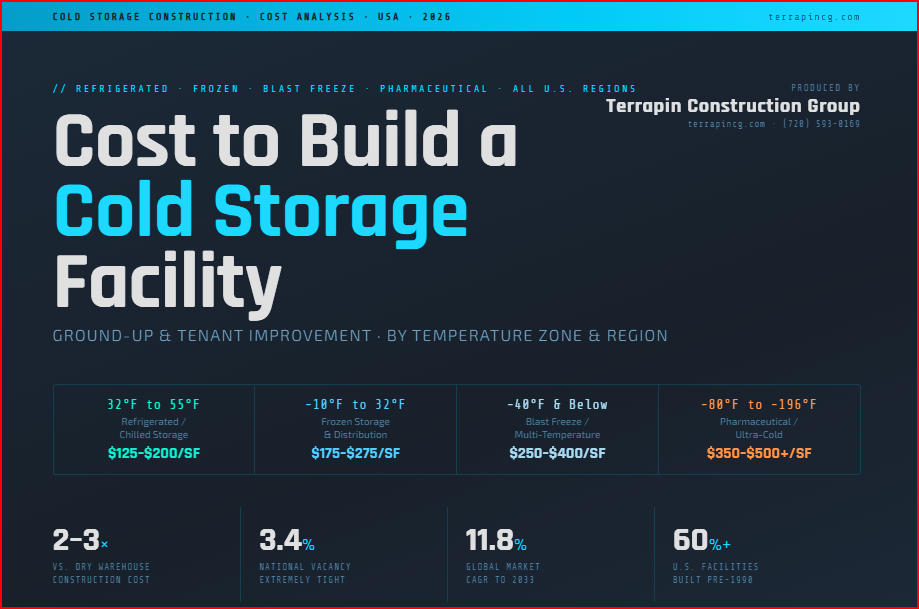
Cost to Build a Cold Storage Facility (2026)
Refrigerated, frozen, and blast-freeze cost benchmarks. Tenant improvement vs. ground-up by region, and what owners actually pay.
Read the breakdown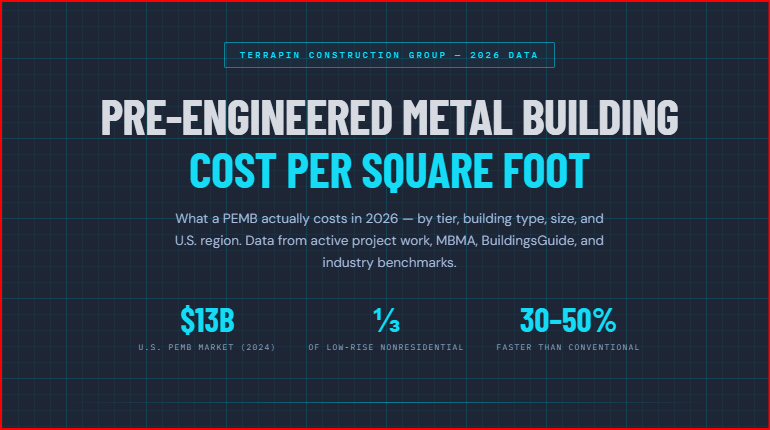
PEMB Cost Per Square Foot (2026)
Three pricing tiers, regional variation, finished cost by building type, and the five mistakes that blow PEMB budgets.
See the tiers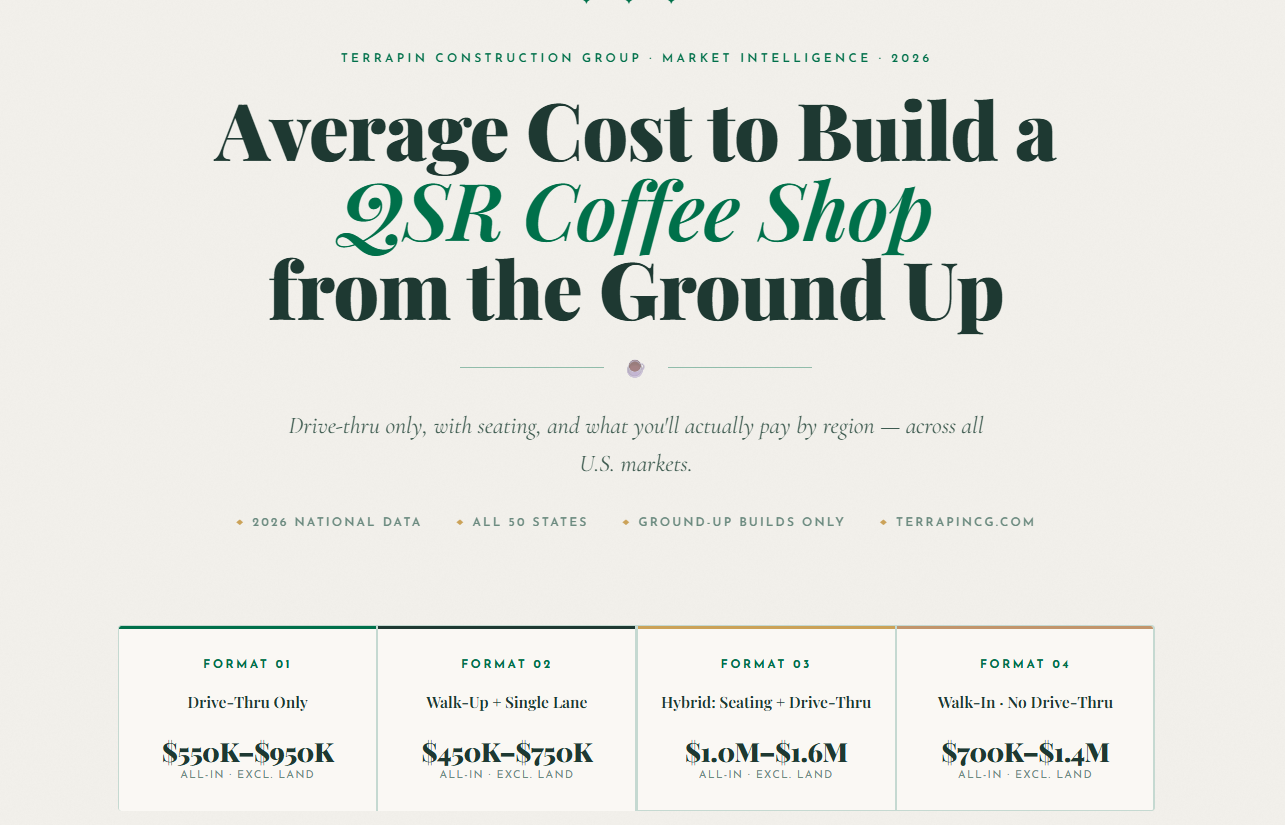
Cost to Build a QSR Coffee Shop (2026)
Drive-thru, walk-up, hybrid, and walk-in formats. Total project cost ranges by format and region, including the drive-thru premium.
Read the format guide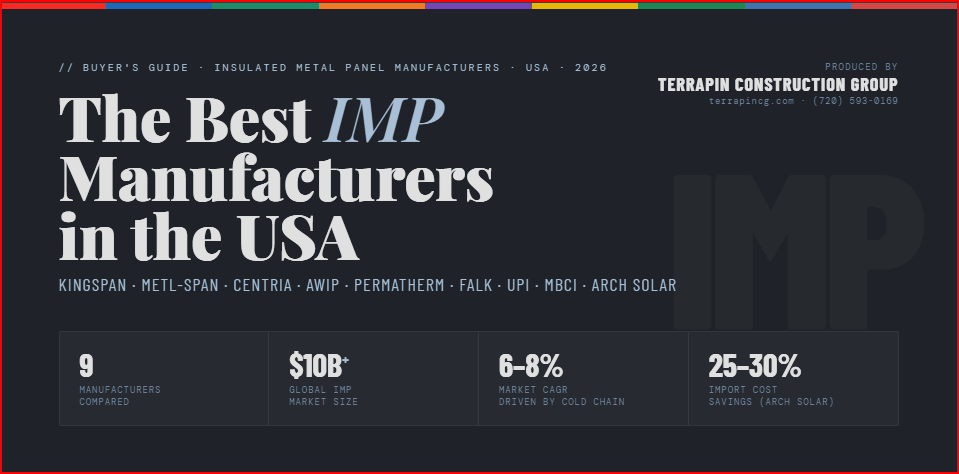
Best IMP Manufacturers Compared (2026)
Kingspan, Metl-Span, CENTRIA, AWIP, PermaTherm, FALK, UPI, MBCI, and Arch Solar. Core chemistry, lead times, and where each panel fits.
Compare manufacturers
A/E Fees & Soft Costs (2026)
Architectural and engineering fee benchmarks by facility type and region, plus the soft cost categories that quietly inflate project budgets.
See fee benchmarks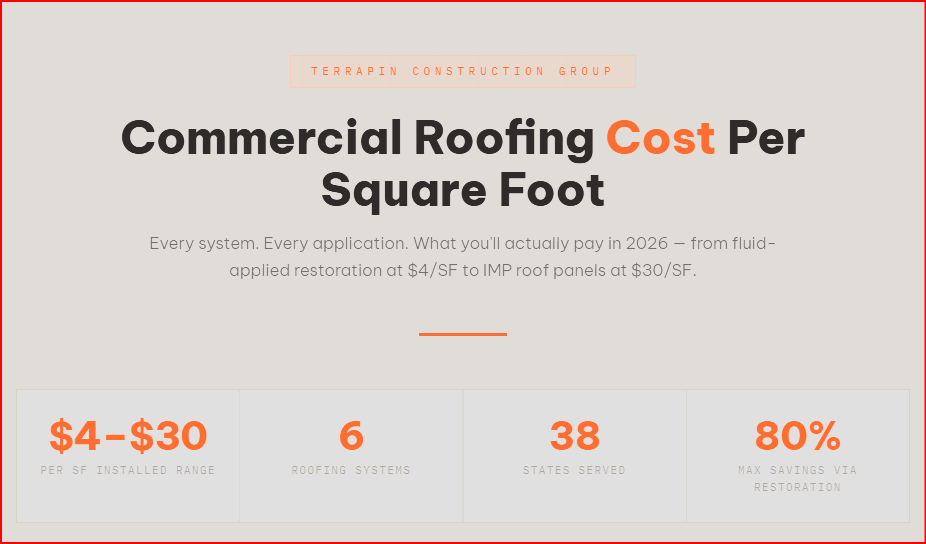
Commercial Roofing Cost Per SF (2026)
Six commercial roofing systems compared, the six factors driving cost, and replace-vs-restore economics for owners.
Read the system guideThe Cost Library
Build Costs by Facility Type
Total project cost per SF, by region
- All Building Types: Master Cost Table
- Cold Storage Facilities
- Data Centers
- Food Processing Facilities
- Cleanrooms by ISO Class
- GMP & Pharma Facilities
- Manufacturing Facilities
- Cannabis Cultivation Buildouts
- 3PL & Logistics Warehouses
- Self-Storage Facilities
- Battery Energy Storage (BESS)
- Medical Office Buildings
- Urgent Care Centers
- Dental Offices
- Veterinary Clinics
- Optometry Offices
- Assisted Living & Memory Care
- QSR Restaurants
- Fast Casual Restaurants
- High-End Restaurants
- Breweries & Distilleries
- Hotels (Cost Per Key)
- Car Washes
- Daycare & Childcare Centers
- EV Charging & Fleet Depots
- K-12 Schools
- Multi-Family (Cost Per Unit)
- Parking Garages (Per Space)
- Grocery-Anchored Retail Centers
- Tenant Improvement Buildouts
Trade & System Costs
Scope-level pricing per SF
- IMP Installation Cost
- IMP Install Labor Per SF
- PEMB Cost Per SF
- Tilt-Up Concrete
- Modular Construction
- Commercial Roofing
- Commercial Flooring
- Flooring by Building Type
- Epoxy & Polyaspartic Coatings
- Commercial HVAC
- Commercial Electrical
- Commercial Plumbing
- Drywall Installation
- CMU Block Walls
- Post-Tensioned Slabs
- A/E Fees & Soft Costs
- Architectural Services & ROI
- Contingency by Project Type
City Cost Guides
Regional cost multipliers
Comparisons & Decisions
Head-to-head guidance for owners
- Design-Build vs. CMAR vs. DBB
- Cost-Plus vs. GMP Delivery
- PEMB vs. Conventional Steel
- IMP vs. Tilt-Up for Cold Storage
- TPO vs. EPDM Roofing
- Ammonia vs. CO2 vs. Glycol
- Tier III vs. Tier IV Data Centers
- Polyiso vs. EPS IMP Panels
- FM Ratings for IMP: Why It Matters
Schedule & Risk
Timelines, lead times, exposure
- How Long Ground-Up Construction Takes
- Permitting Timelines by State
- Material Lead Times
- Switchgear & Generator Lead Times
- Mechanics Lien Timing by State
- Lien Waiver Types
- Retainage Release Mechanics
- Surety Bonding for GCs
- Defect Statutes by State
- Loan Draw Schedules
- SBA 504 Loan Guide
- Construction-to-Perm Conversion
Browse by Vertical
Browse by Market
Licensed in all 50 states. Don't see your market? Contact us and we'll cover it.
Quick Answers
What does commercial construction cost per square foot in 2026?
How much does it cost to build a cold storage facility?
How much does insulated metal panel (IMP) installation cost?
How long does ground-up commercial construction take?
What is design-build and why do owners choose it?
Does Terrapin Construction Group work in my state?
Free Owner Tools
Get a Number on Your Project
Free AI estimates. Real conversations. No sales pressure.
TCG.ai Construction Estimator
Get an estimatePreconstruction Services
Start preconSchedule a 30-min call
Book with Will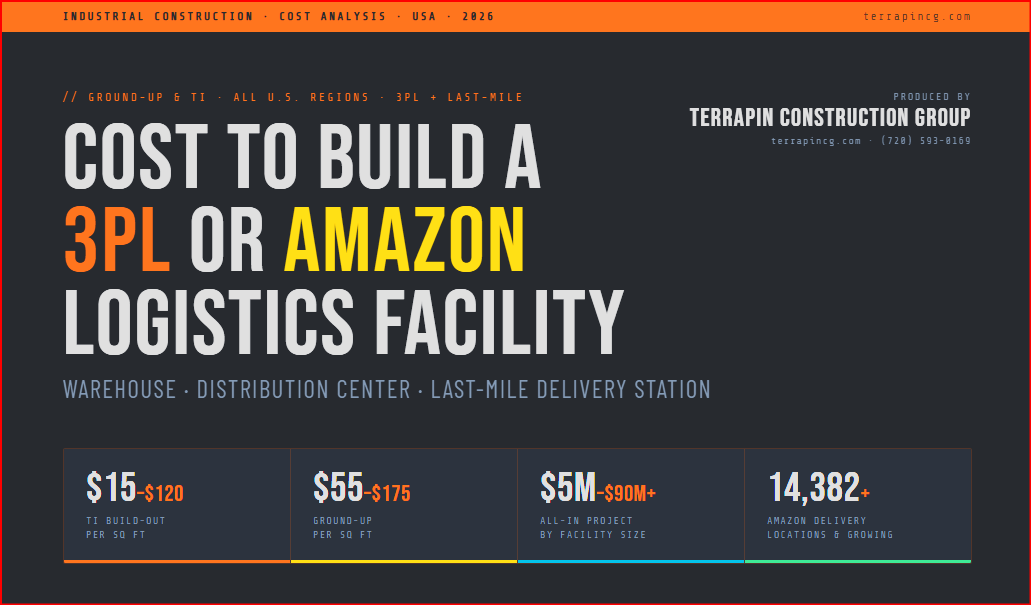
Average Cost to Build a 3PL or Amazon Logistics Facility in the USA (2026): Tenant Improvement vs. Ground-Up, and What You'll Actually Pay by Region
Building a ground-up 3PL or logistics warehouse in 2026 costs $55 to $175 per square foot for large-format distribution, or $150 to $300+ per square foot for a purpose-built last-mile delivery station with dock infrastructure, office, and automation-ready systems. Here's what developers and logistics operators actually pay their commercial general contractor — by facility type, delivery method, and U.S. region.
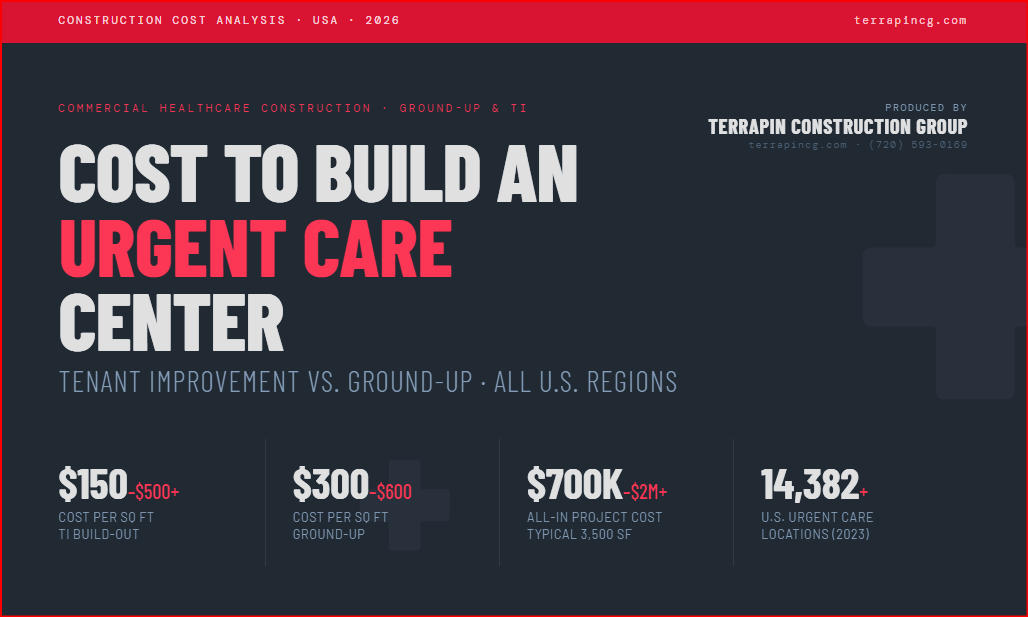
Average Cost to Build an Urgent Care Center in the USA (2026): Tenant Improvement vs. Ground-Up, and What You’ll Actually Pay by Region
Building a ground-up urgent care center in 2026 costs $200 to $600 per square foot — or $600,000 to over $2 million all-in for a typical 3,500 SF facility — depending on format, imaging scope, and geography. Here's a complete, honest breakdown of what you'll actually spend, whether you're doing a tenant improvement or building from the ground up with a commercial general contractor.
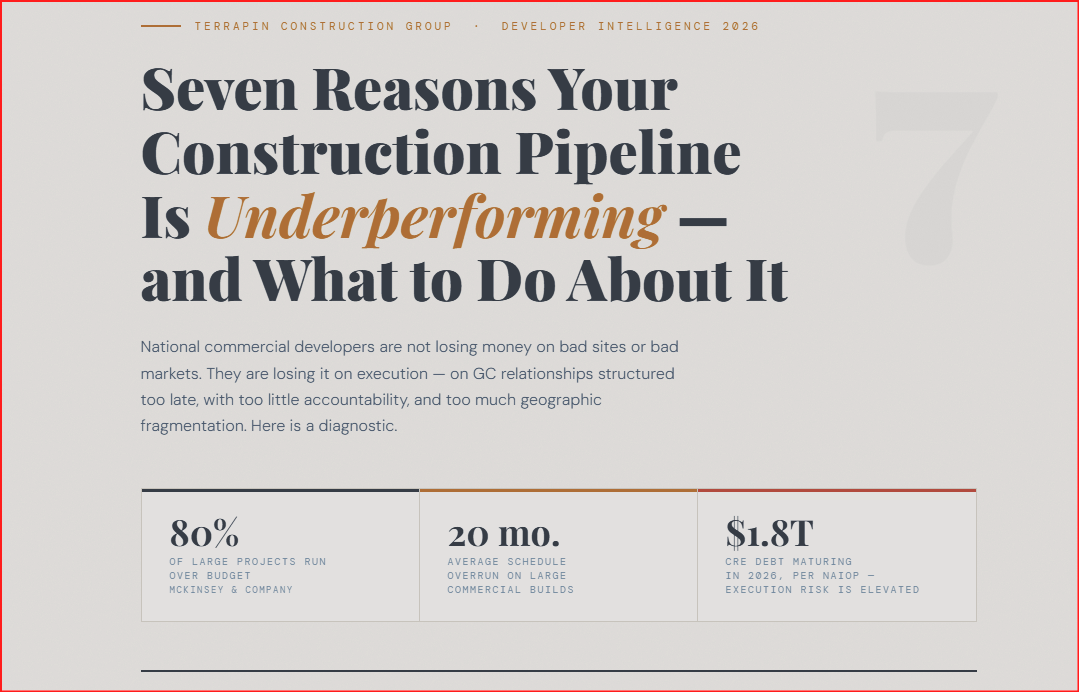
What National Commercial Developers Actually Lose When the GC Relationship Breaks Down
Most large commercial developers are not losing money on bad sites or bad markets. They are losing it on execution: on construction budgets delivered without GC input, on schedules that slip when subcontractor coordination breaks down across markets, and on material cost exposure that no one priced at the time the pro forma was underwritten. This article addresses the seven most consistent pain points we see in developer-GC relationships at scale, and what a better-structured national GC engagement actually looks like. Brought to you by Terrapin Construction Group Market Intelligence.
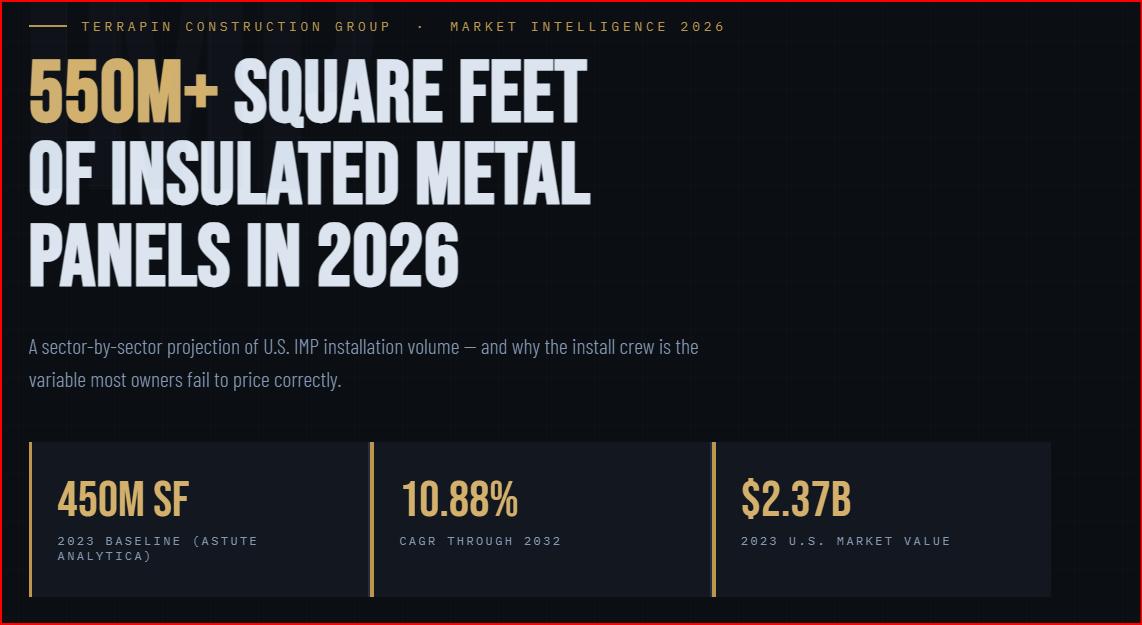
How Many Square Feet of Insulated Metal Panels Will Be Installed in the USA in 2026? A Sector-by-Sector Projection
The U.S. IMP market is on track to install more than 550 million square feet of insulated metal panels in 2026 — across cold storage, industrial, commercial, healthcare, and data center projects nationwide. Here's a sector-by-sector projection, why imp install quality is the variable most owners underestimate, and what separates an experienced nationwide crew from one that causes expensive rework.
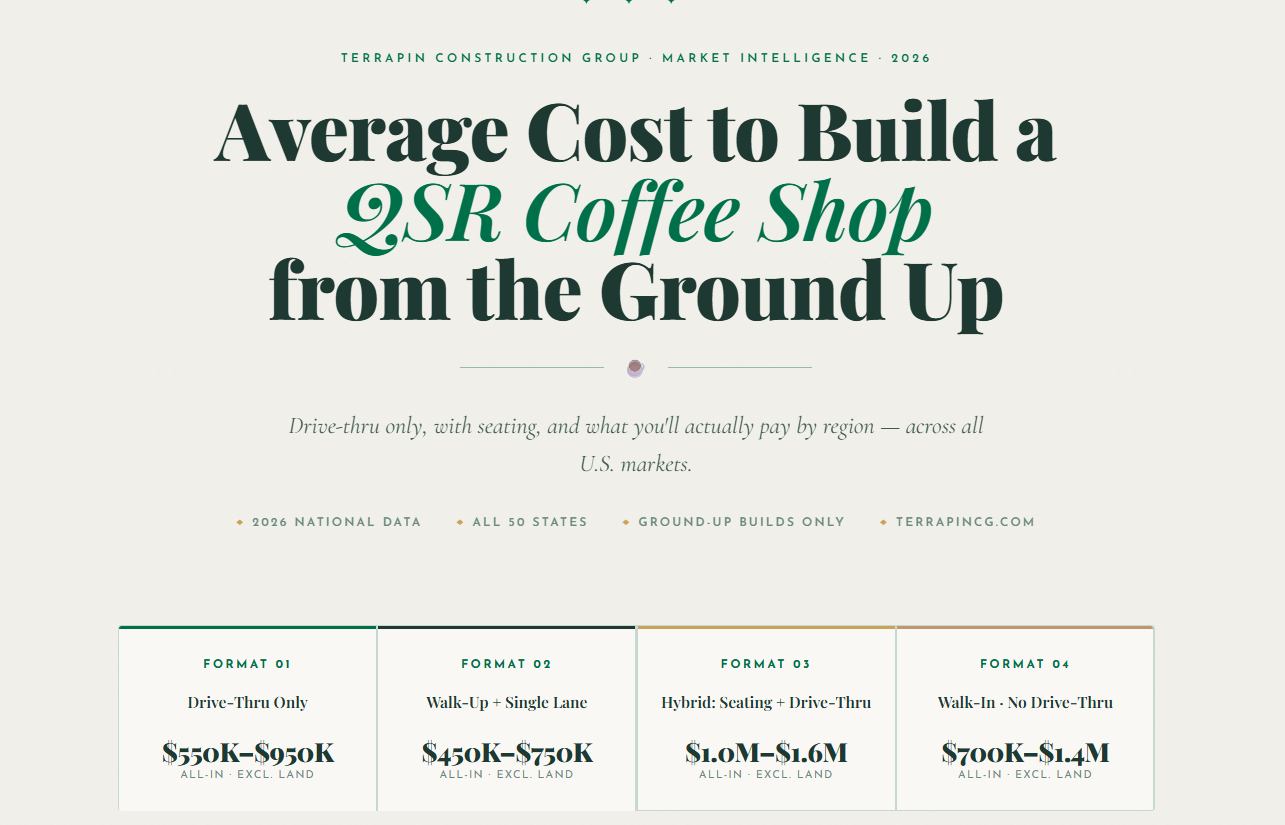
Average Cost to Build a QSR Coffee Shop from the Ground Up in the USA (2026): Drive-Thru, With Seating, and By Region
A ground-up QSR coffee project costs anywhere from $550,000 to over $1.5 million depending on format, finishes, and location. Here's an honest, detailed cost breakdown — drive-thru only versus with seating, and how regional labor and material markets move the number from Texas to New York
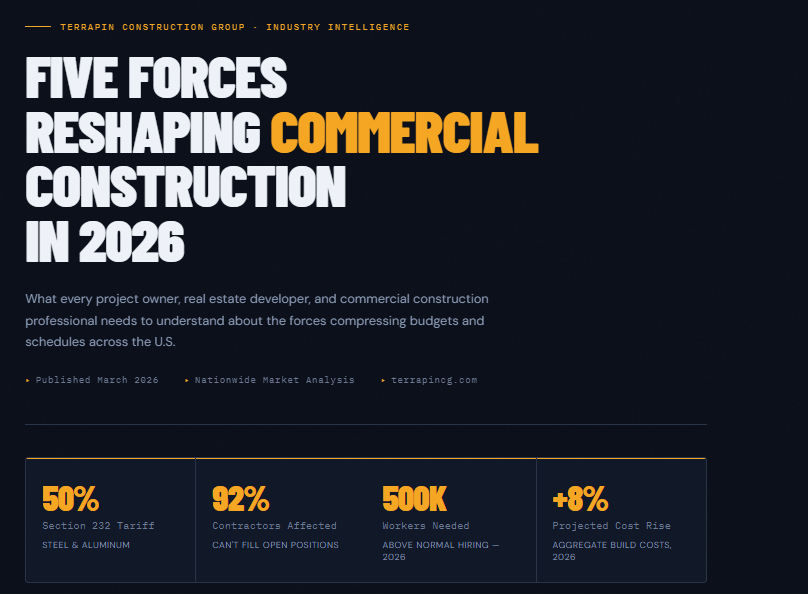
Commercial Construction in 2026: The Five Forces Reshaping Every Project in America
Steel tariffs, workforce shortages, and rising nonresidential costs are reshaping every commercial build in the U.S. in 2026. Here's what project owners, developers and general contractors need to know — and how to stay ahead of it.